GramTrigger guide
How to Organize Instagram Leads from Comment Campaigns
Instagram leads generated through comment keyword campaigns have a short organizational window. The first few hours after a post goes live are when the most requests arrive, and without a system already in place, those leads end up spread across a comment section, a notes app, and maybe a spreadsheet tab. Organizing them retroactively is difficult and error-prone. GramTrigger is designed around organizing leads from the start — with a campaign record that holds the keyword, destination, script, status, and lead count before the campaign launches. GramTrigger is a workflow and request-management tool, not an official Instagram or Meta product.
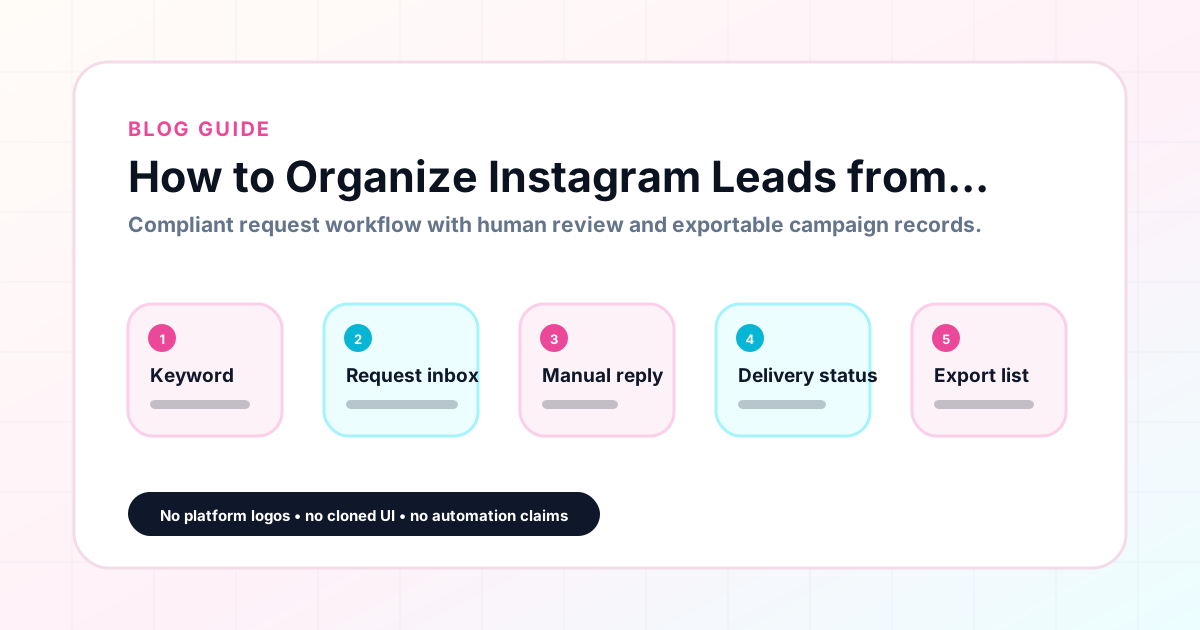
GramTrigger methodology
Original operating system for How to Organize Instagram Leads from Comment Campaigns
The GramTrigger method treats every comment campaign as an approval workflow, not an automation shortcut. The goal is to prepare the offer, lead magnet, keyword strategy, Reply Library draft, Request Inbox stages, handoff owner, and Lead Export fields before comments turn into operational work.
Campaign Blueprint SOP
Confirm the offer, lead magnet, keyword strategy, comment CTA, reply draft, owner, approval status, and Lead Export fields before launch.
Comment Funnel Workflow
Use the same path everywhere: Offer → Lead Magnet → AI Funnel Builder → Keyword Strategy → Comment CTA → Reply Draft → Review & Approval → Campaign Launch → Request Inbox → Lead Tracking → Export.
Approval Queue Workflow
Review caption CTA, pinned comment, reply draft, lead magnet link, compliance notes, and client approval before a campaign goes live.
Export Readiness Checklist
Export only after records have clear status, no sensitive private data, an owner, follow-up stage, and a documented next action.
Campaign Recovery Workflow
If requests are missed, pause new promotion, review pending records, update Reply Library drafts, communicate manually where appropriate, and document the process fix.
Decision framework
Use this matrix before choosing the next step.
Manual review reminder
Draft response — review before sending. Use approved tools and follow platform rules. GramTrigger helps plan and manage lead magnet workflows; it does not scrape users or auto-send unauthorized DMs.
Workflow Overview
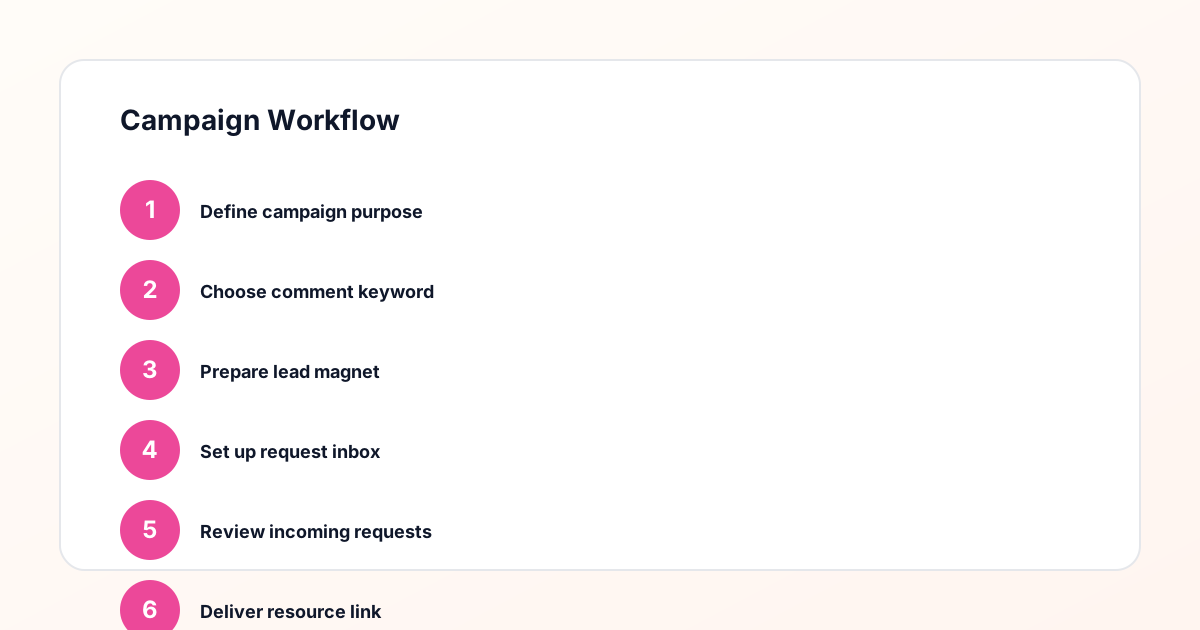
Campaign Checklist
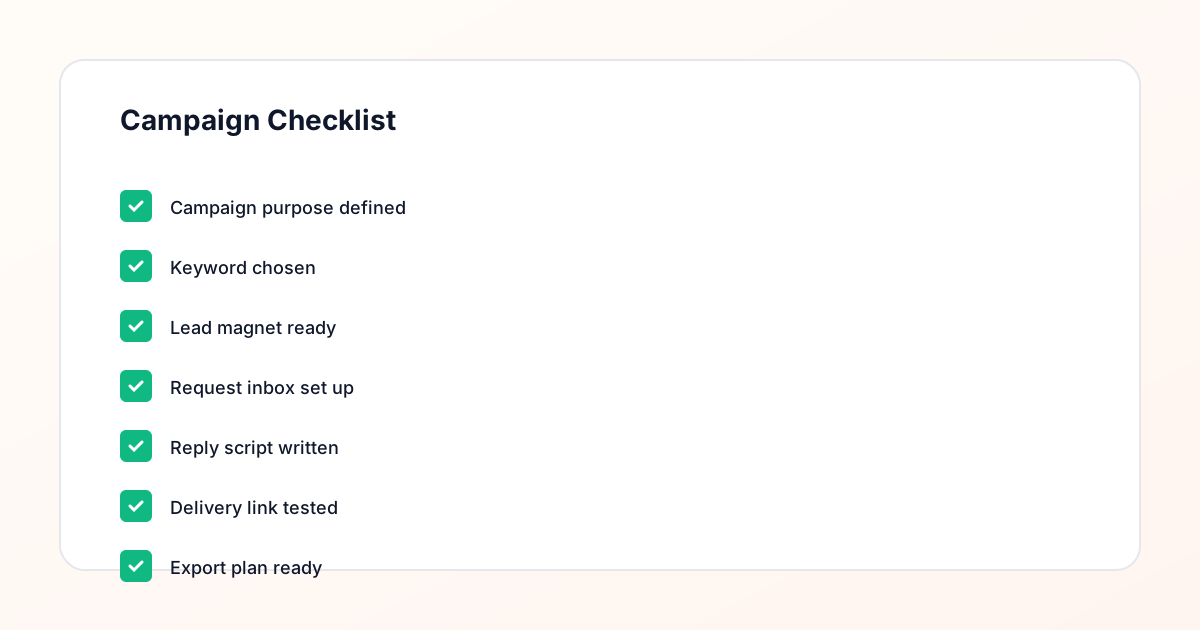
Why Instagram leads need a dedicated organization system
Instagram leads from comment campaigns are different from leads generated through a form or landing page. They arrive through a public comment section that was not designed for lead management. The native Instagram interface provides no way to tag a comment as a lead, track whether it was fulfilled, or export a list of requesters at campaign close. Creators who try to manage leads directly through Instagram end up doing a lot of manual work — scrolling through comments, remembering which ones were responded to, and rebuilding the list from memory after the campaign ends. A dedicated organization system takes the lead management out of Instagram and into a structured campaign record where each lead can be tracked through the fulfillment workflow.
The campaign record as the organizational anchor
Organizing Instagram leads starts with the campaign record. The record is the anchor that connects the post, the keyword, the destination link, the response draft, and the lead count into one structured view. When the campaign record exists before the post launches, every lead that comes in has a place to go. There is no scrambling to create a system mid-campaign. The keyword is already saved. The link is already confirmed. The script is already written. The status is already set. GramTrigger organizes these elements into a campaign record that the team can work from immediately when the first request arrives, so leads are captured in an organized way from the start rather than organized retroactively after the campaign ends.
Organizing leads by campaign rather than by date
A common mistake in Instagram lead organization is tracking leads chronologically — in the order they arrived — rather than by campaign. Chronological tracking works when you only have one campaign running. When you have two or more active campaigns, chronological tracking means that leads from different campaigns are mixed together in the same list. GramTrigger organizes leads by campaign, not by date, so that each campaign's leads are connected to the specific keyword, offer, and fulfillment path that generated them. This campaign-centric organization makes it straightforward to see how many leads each specific post generated and to compare performance across campaigns.
Using status to track lead progress
Organizing leads effectively requires more than just capturing them — it requires tracking their progress through the fulfillment workflow. A lead that has been captured but not yet fulfilled is not the same as a lead that has been fulfilled and is now in the destination opt-in. Status tracking makes this distinction visible. GramTrigger uses request status and campaign status to show where leads are in the workflow at any given time. Pending leads — those that have been captured but not yet fulfilled — are visible as a queue that the team can work through. Fulfilled leads are marked accordingly. This distinction helps creators avoid missing leads and helps teams prioritize their fulfillment work.
Avoiding the pitfalls of lead organization in spreadsheets
Spreadsheets are often the first lead organization tool that creators reach for after Instagram comment campaigns start generating meaningful volume. The immediate problem is that spreadsheets do not have a standard structure for this use case, so every creator invents their own. When a team member needs to update the sheet, they may use different status labels or column formats than the original creator. When the campaign ends and a new one starts, the creator has to create a new sheet or add new rows to an existing one that is already messy. GramTrigger eliminates these problems by providing a consistent campaign record structure that is the same for every campaign, every client, and every team member.
Exporting organized leads for follow-up and reporting
After a campaign closes, organized leads become a reporting asset. GramTrigger exports include the campaign name, keyword, destination link, response draft, status, and lead count. For creators, this export is the performance record for the campaign. For agencies, it is the client deliverable. For teams planning future campaigns, it is the baseline data for improving the next campaign's keyword, offer, or fulfillment approach. Organized leads that have been tracked from capture through fulfillment produce richer post-campaign data than leads that were assembled retroactively from comment history, which is why organizing during the campaign — rather than after — produces better reporting.
Organizing leads across multiple campaigns simultaneously
When a creator or agency is running multiple campaigns at the same time, lead organization across campaigns becomes a coordination challenge. Which campaign is generating the most leads right now? Which one has the most pending fulfillment requests? Which one has already been completed? GramTrigger's dashboard view shows all active campaigns with their statuses and lead counts so that the team can see the full picture at once. This multi-campaign view is one of the most practical advantages of using a dedicated campaign management tool over a spreadsheet, which requires opening a separate tab or file for each campaign to assess the same information.
GramTrigger for organized Instagram lead management
GramTrigger provides the structure that turns Instagram comment campaigns from a chaotic comment-section experience into an organized lead management workflow. The campaign record holds all the organizational elements — keyword, link, script, status, lead count — in one place. Leads are organized by campaign from the moment of capture. Fulfillment status is tracked in real time. Exports are available at close. The platform does not claim any official relationship with Instagram or Meta and does not send automatic messages. Its role is specifically to organize the lead management side of comment keyword campaigns so that creators, coaches, and agencies can run cleaner, more reliable campaigns at any volume.
Compliance Note
GramTrigger helps organize Campaign Blueprints, Reply Library drafts, Request Inbox stages, approvals, delivery status, Lead Exports, and reports. Delivery should be handled manually or through approved tools depending on your account and available platform support.