
GramTrigger guide
Lead Magnet Fulfillment Workflow for Instagram Campaigns
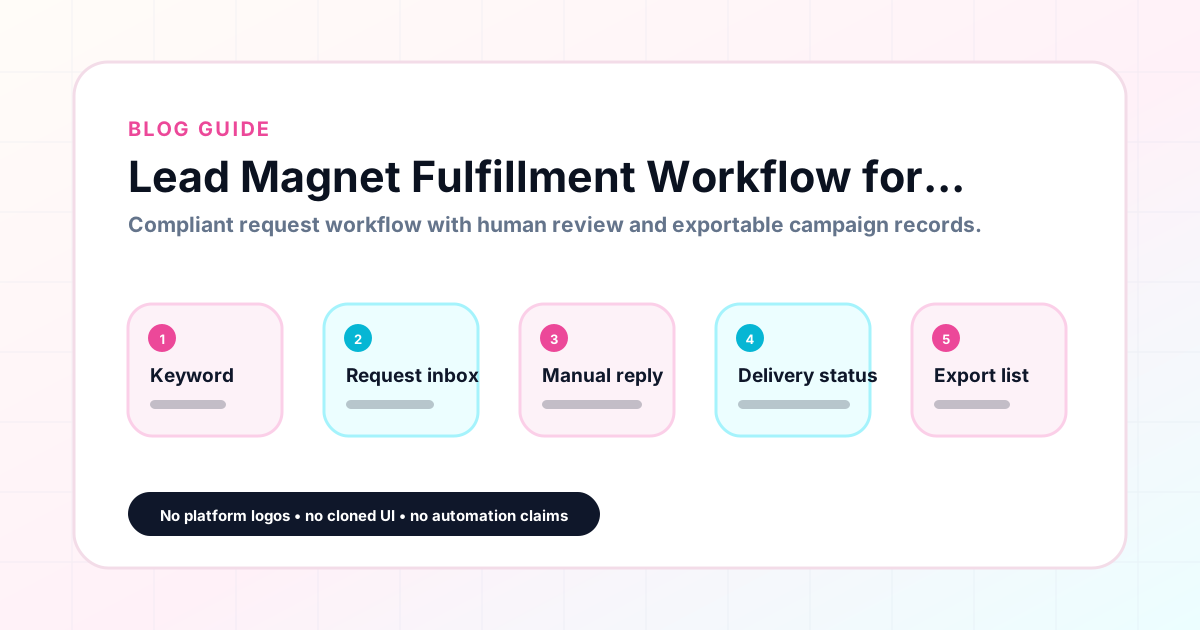
Lead magnet fulfillment is the step that separates a comment keyword campaign from a comment keyword promise. When someone types GUIDE on your post, the campaign has succeeded in generating intent. Fulfillment is what determines whether that intent turns into a satisfied lead or a missed opportunity. A reliable fulfillment workflow — one that is consistent, fast, and organized — is what makes comment campaigns worth running repeatedly. GramTrigger helps creators build that workflow with a campaign record that holds the destination link, response draft, status, and lead count in one organized place. GramTrigger is a workflow and request-management tool, not an official Instagram or Meta product.
GramTrigger methodology
Original operating system for Lead Magnet Fulfillment Workflow for Instagram Campaigns
The GramTrigger method treats every comment campaign as an approval workflow, not an automation shortcut. The goal is to prepare the offer, lead magnet, keyword strategy, Reply Library draft, Request Inbox stages, handoff owner, and Lead Export fields before comments turn into operational work.
Campaign Blueprint SOP
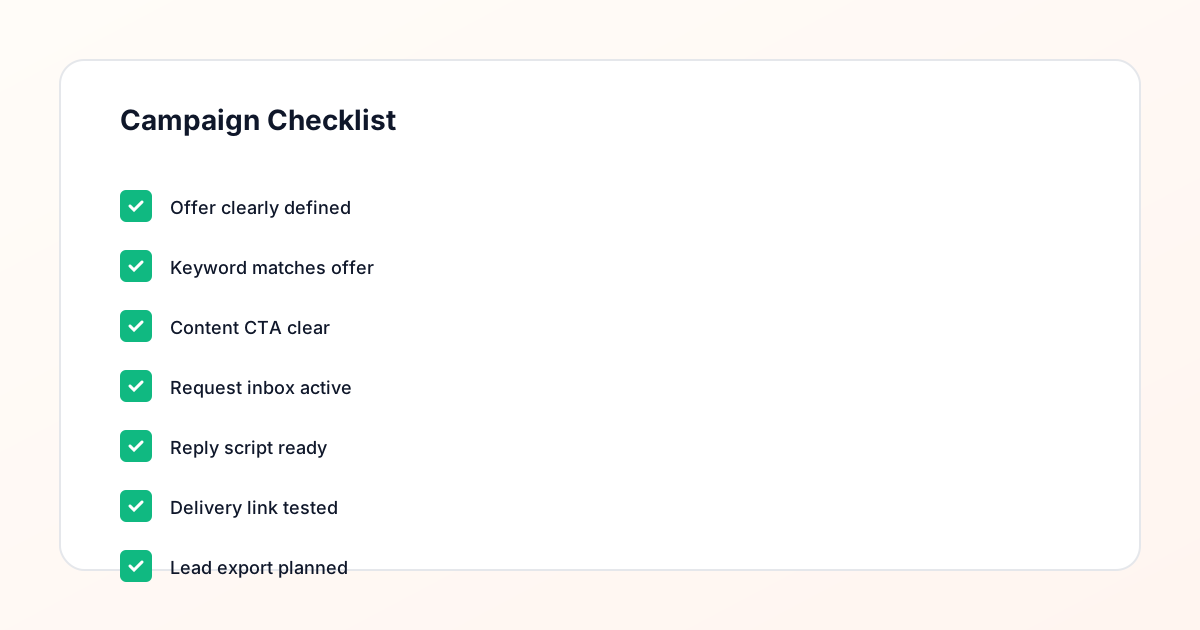
Confirm the offer, lead magnet, keyword strategy, comment CTA, reply draft, owner, approval status, and Lead Export fields before launch.
Comment Funnel Workflow
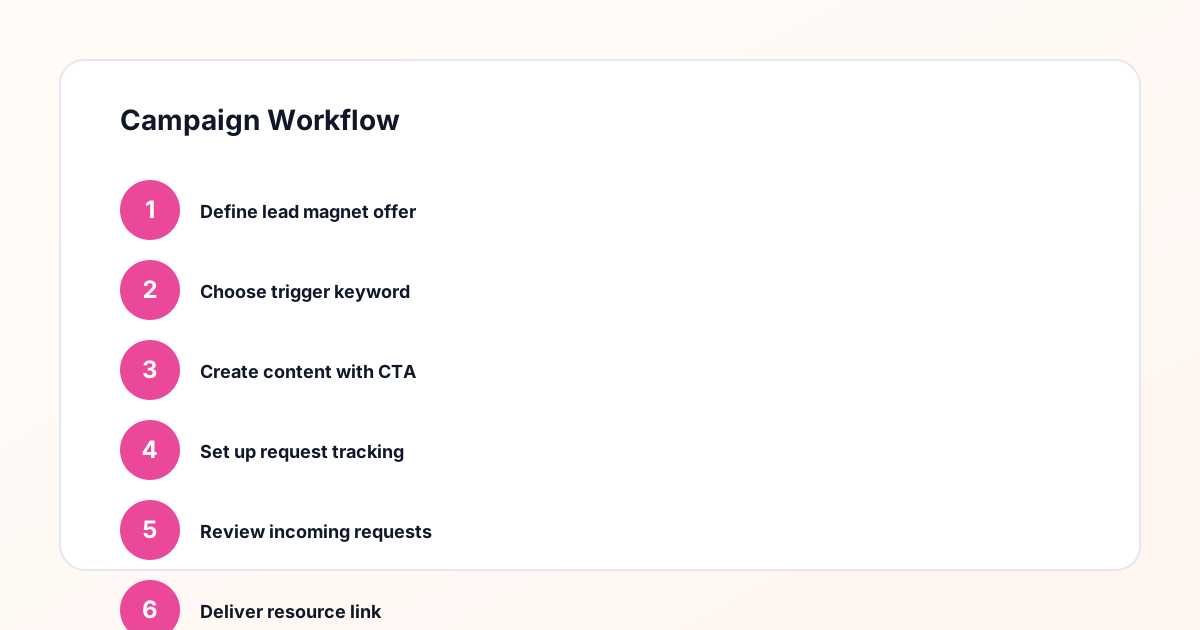
Use the same path everywhere: Offer → Lead Magnet → AI Funnel Builder → Keyword Strategy → Comment CTA → Reply Draft → Review & Approval → Campaign Launch → Request Inbox → Lead Tracking → Export.
Approval Queue Workflow
Review caption CTA, pinned comment, reply draft, lead magnet link, compliance notes, and client approval before a campaign goes live.
Export Readiness Checklist
Export only after records have clear status, no sensitive private data, an owner, follow-up stage, and a documented next action.
Campaign Recovery Workflow
If requests are missed, pause new promotion, review pending records, update Reply Library drafts, communicate manually where appropriate, and document the process fix.
Decision framework
Use this matrix before choosing the next step.
Manual review reminder
Draft response — review before sending. Use approved tools and follow platform rules. GramTrigger helps plan and manage lead magnet workflows; it does not scrape users or auto-send unauthorized DMs.
Workflow Overview
Campaign Checklist
What fulfillment means in a comment campaign
Fulfillment in a comment keyword campaign is the process of responding to each request with the promised resource. When someone comments GUIDE, fulfillment is sending them the guide link. When someone comments WAITLIST, fulfillment is sending them the waitlist registration page. The fulfillment step is the handoff between the public campaign promise — the caption — and the private delivery — the DM, the response, the link. Getting this handoff right requires a confirmed link, a consistent script, and a reliable system for tracking which requests have been handled and which are still waiting. Without these three elements, fulfillment is slow, inconsistent, and prone to errors.
Preparing fulfillment materials before the post launches
The most important preparation step for lead magnet fulfillment is completing all materials before the post goes live. This includes confirming the destination link, writing the response draft, testing the resource or opt-in page, and setting up the campaign record in GramTrigger with all fields completed. Creators who skip this preparation step often find themselves writing a script on the fly while the first wave of requests is already arriving. That rushed fulfillment produces inconsistent responses, increases the risk of sending the wrong link, and creates a poor experience for the leads who were fast enough to comment early in the campaign window. Pre-launch preparation eliminates these problems at their source.
Writing an effective response draft
The response draft is the message that accompanies the resource link in every response to a comment keyword request. An effective response draft is warm but efficient — it acknowledges the follower's request, provides the link clearly, and includes a brief closing that invites further engagement or action. It should not be overly long, because followers responding to a comment campaign are typically looking for a quick resource, not a lengthy response. The script should be written once, reviewed for accuracy, and then saved in the GramTrigger campaign record so that every subsequent fulfillment response is a copy of the confirmed, reviewed script rather than a new composition from scratch.
Handling fulfillment manually and at scale
For most creators and small businesses, lead magnet fulfillment starts as a manual process — the creator or a team member reads each comment, identifies the keyword, and sends the prepared response. This manual approach works well for campaigns with modest volume and becomes more important for campaigns that generate a high number of requests. The key to scaling manual fulfillment is the quality of the campaign record: a confirmed link, a reviewed script, and a clear status system for tracking what has and has not been sent. GramTrigger provides all of these in one campaign record so that manual fulfillment is as fast and reliable as possible even as volume increases.
Managing multiple lead magnets simultaneously
Creators who run multiple campaigns at the same time — each with a different lead magnet and a different keyword — need to make sure fulfillment for each campaign uses the correct link and script. Sending the guide link to someone who asked for the coupon, or using last week's script for this week's campaign, are fulfillment errors that create confusion for leads and reflect poorly on the campaign. GramTrigger organizes each campaign with its own dedicated record so that fulfillment for multiple simultaneous campaigns is always connected to the correct materials. There is no risk of using the wrong script or the wrong link for a given campaign because each one has its own record.
Tracking fulfillment status in real time
Fulfillment status tracking tells the team which requests have been handled and which are still waiting. Without real-time status tracking, fulfillment is managed through memory — the fulfillment team relies on their own recollection of which requests they have already responded to. Memory-based tracking fails as soon as the volume exceeds a manageable number or when more than one person is handling fulfillment at the same time. GramTrigger tracks request status within the campaign record so that the pending queue is always visible and accurate, regardless of who is handling fulfillment or how long the campaign has been running.
Updating the response draft when needed
Response drafts sometimes need to be updated mid-campaign. Maybe the creator wants to add a note about a follow-up event. Maybe the link changed. Maybe the resource was updated and the script should mention the new version. In a well-organized campaign management system, updating the script is a single edit that immediately affects all subsequent fulfillment responses. GramTrigger holds the script in the campaign record, so updating it is one change in one place. Team members handling fulfillment after the update see the new script without needing to be notified individually. This centralized script management is one of the key advantages of using a dedicated campaign tool over a scattered notes-and-messages approach.
Exporting fulfillment records at campaign close
At the end of a lead magnet campaign, the fulfillment records become the performance archive. How many requests were fulfilled? How many leads were generated? Was there a meaningful drop-off between requests and fulfillment? GramTrigger exports include campaign records with lead counts and status information so that post-campaign review is based on organized data rather than memory or manual tallying. These exports are especially valuable for agencies that need to demonstrate fulfillment quality to clients and for creators who want to compare the effectiveness of different lead magnets across multiple campaigns.
Compliance Note
GramTrigger helps organize Campaign Blueprints, Reply Library drafts, Request Inbox stages, approvals, delivery status, Lead Exports, and reports. Delivery should be handled manually or through approved tools depending on your account and available platform support.