
GramTrigger guide
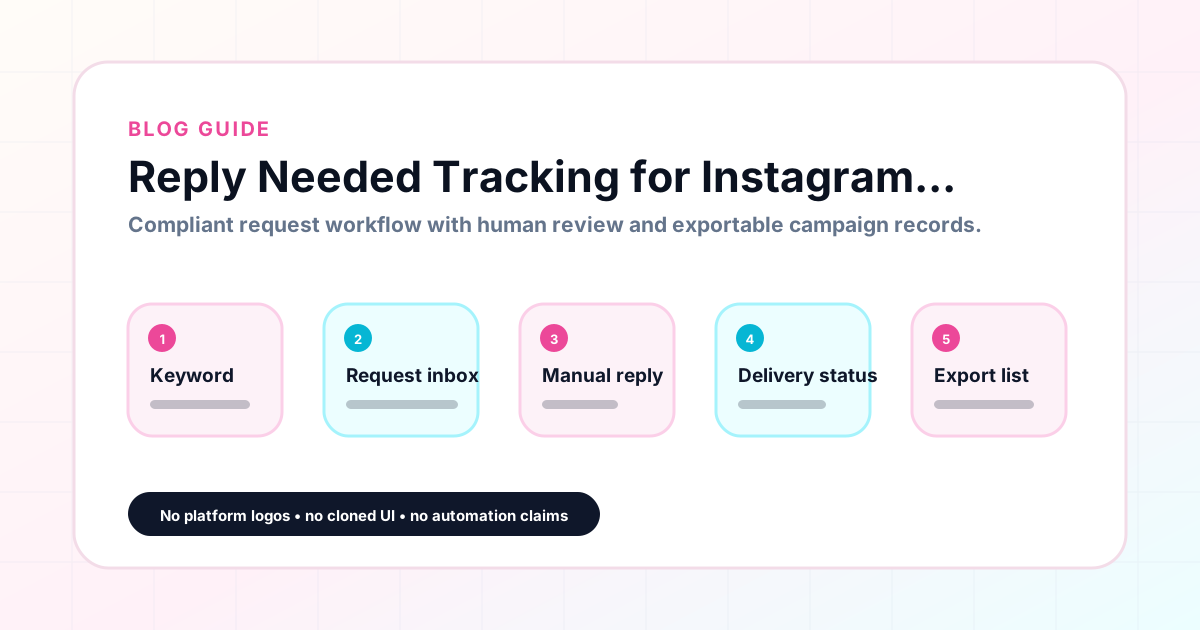
Reply Needed Tracking for Instagram Comment Campaigns
In any active Instagram comment keyword campaign, the gap between who requested something and who actually received it can grow quickly. Without a system to track which requests are pending versus fulfilled, the team ends up scanning comment threads, checking DM histories, and trying to remember which responses went out during the busiest hours. Reply-needed tracking solves this by marking every unfulfilled request clearly so the team knows exactly where to start. GramTrigger includes reply-needed tracking as part of the campaign request workflow, helping creators and agencies stay on top of every campaign without losing leads. GramTrigger is a workflow and request-management tool, not an official Instagram or Meta product.
GramTrigger methodology
Original operating system for Reply Needed Tracking for Instagram Comment Campaigns
The GramTrigger method treats every comment campaign as an approval workflow, not an automation shortcut. The goal is to prepare the offer, lead magnet, keyword strategy, Reply Library draft, Request Inbox stages, handoff owner, and Lead Export fields before comments turn into operational work.
Campaign Blueprint SOP
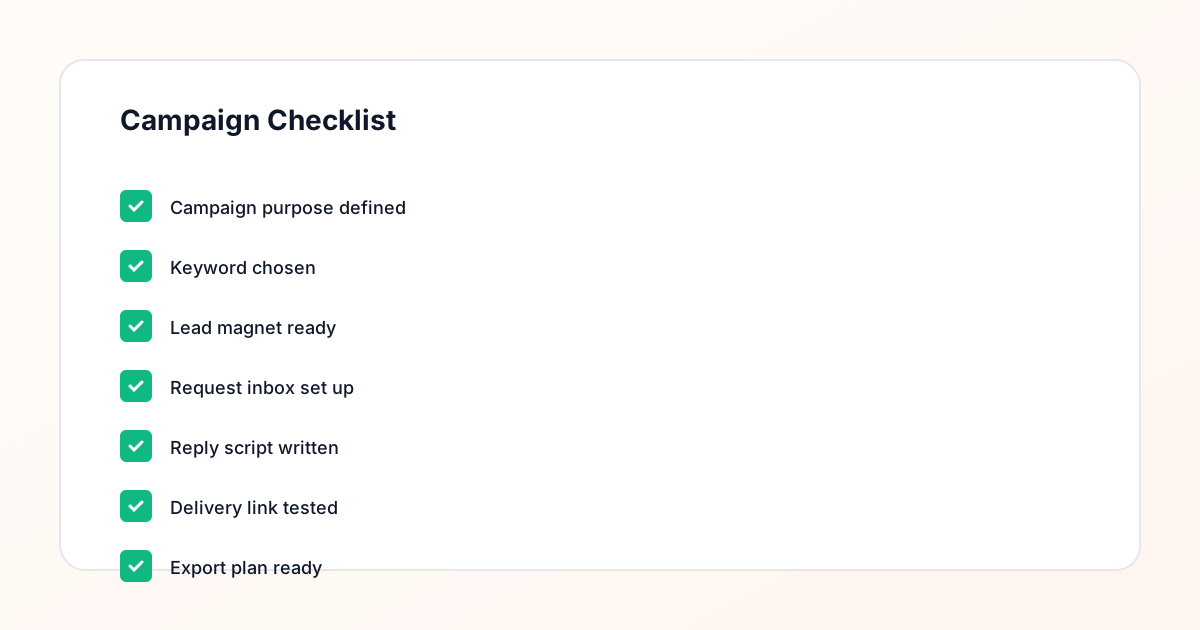
Confirm the offer, lead magnet, keyword strategy, comment CTA, reply draft, owner, approval status, and Lead Export fields before launch.
Comment Funnel Workflow
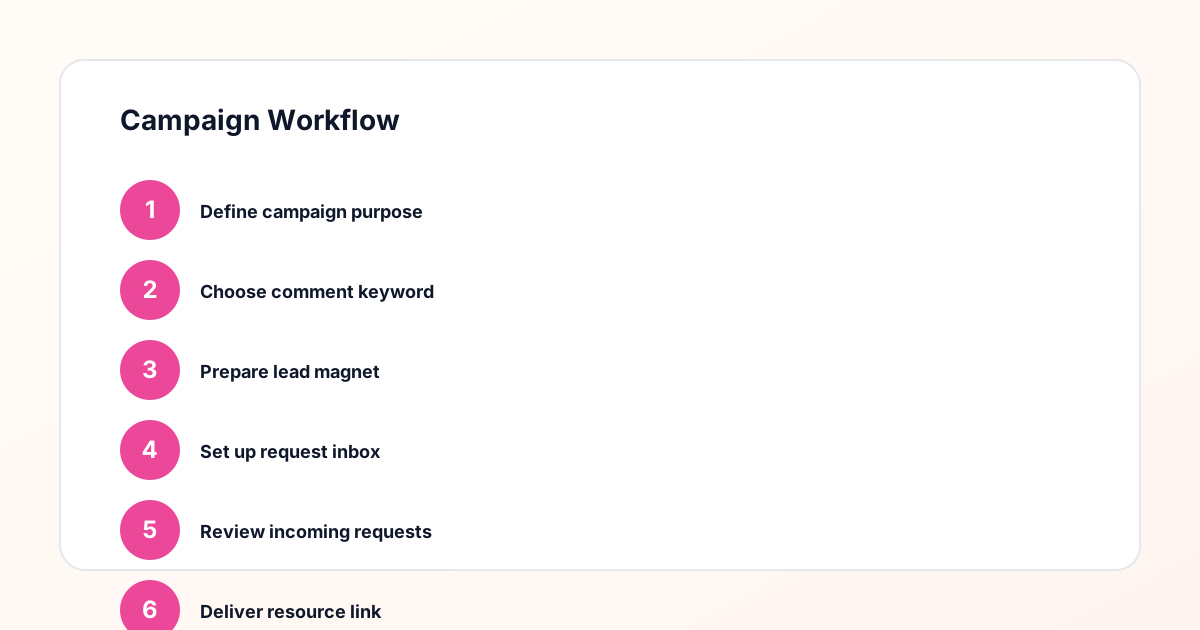
Use the same path everywhere: Offer → Lead Magnet → AI Funnel Builder → Keyword Strategy → Comment CTA → Reply Draft → Review & Approval → Campaign Launch → Request Inbox → Lead Tracking → Export.
Approval Queue Workflow
Review caption CTA, pinned comment, reply draft, lead magnet link, compliance notes, and client approval before a campaign goes live.
Export Readiness Checklist
Export only after records have clear status, no sensitive private data, an owner, follow-up stage, and a documented next action.
Campaign Recovery Workflow
If requests are missed, pause new promotion, review pending records, update Reply Library drafts, communicate manually where appropriate, and document the process fix.
Decision framework
Use this matrix before choosing the next step.
Manual review reminder
Draft response — review before sending. Use approved tools and follow platform rules. GramTrigger helps plan and manage lead magnet workflows; it does not scrape users or auto-send unauthorized DMs.
Workflow Overview
Campaign Checklist
What reply-needed tracking means
Reply-needed tracking is a system that flags campaign requests that have not yet received a fulfillment response. When someone comments the trigger keyword on your post, that request enters the campaign record with a pending or reply-needed status. As the team fulfills requests — sending the resource link via the saved script — each request is updated to a fulfilled or complete status. At any point during the campaign, the team can see exactly how many requests are pending and how many have been handled. This visibility prevents the two most common fulfillment failures in comment campaigns: missing requests entirely and inadvertently sending a response to the same person twice.
Why tracking reply status matters during busy campaigns
The busiest period of any comment keyword campaign is usually within the first few hours of a post going live. During that window, requests can arrive faster than a single person can manage, especially if the account has a large or highly engaged following. Without reply-needed tracking, the team might fulfill the most visible requests — the ones at the top of the comment section — and miss the ones that came in later or arrived through tagged threads. Reply-needed tracking makes the unfulfilled queue visible regardless of when the request arrived, so the team works through requests in order rather than by comment visibility. This is especially important for posts that stay active and continue receiving engagement for days after publication.
How reply-needed tracking prevents double responses
Sending the same person a fulfillment message twice is an avoidable but common mistake in manually managed campaigns. It happens when the team is not using a shared status system and two team members both see the same request and respond to it without knowing the other already handled it. Reply-needed tracking prevents this by marking a request as fulfilled as soon as the first response goes out, so the second team member sees the updated status and skips it. This shared status visibility is particularly important for agencies and creator teams where multiple people may be handling fulfillment simultaneously during a busy campaign window.
Setting up reply-needed tracking in GramTrigger
GramTrigger organizes campaign requests within each campaign record. As requests come in and are entered into the campaign, their status reflects whether a reply has been sent or is still needed. The team can update statuses in real time as fulfillment happens. The dashboard shows request counts by campaign so creators can see at a glance which campaigns have the most pending replies without opening each one individually. This overview is useful during a launch when multiple campaigns may be active simultaneously and the team needs to prioritize which campaigns to address first based on pending request volume.
Using reply-needed tracking for delegation
Reply-needed tracking is one of the features that makes delegation in comment campaigns possible without close oversight. When a creator delegates fulfillment to a VA or an agency team member, the reply-needed queue gives the delegate a clear starting point. They do not need to ask the creator which requests are still pending — the system shows them. They do not need to check their own message history to see if they already responded — the status in the record tells them. This structure removes the coordination overhead that typically makes delegation feel more complicated than it is worth. The delegate opens the campaign, sees the pending queue, follows the script, and marks each request as fulfilled as they go.
Tracking reply status across multiple campaigns
For creators and agencies running multiple campaigns simultaneously, the ability to see reply-needed status across all active campaigns is especially valuable. A single dashboard view that shows pending reply counts by campaign allows for fast prioritization — the campaigns with the most pending requests get attention first. Without this cross-campaign view, the team has to open each campaign individually to check the queue, which adds time and increases the chance that a high-volume campaign goes unnoticed. GramTrigger organizes all campaigns in the dashboard so that reply-needed counts are visible without needing to dig into each record separately.
Archiving fulfilled requests for performance review
When all requests in a campaign have been fulfilled, the complete record — including the fulfillment count — becomes part of the campaign archive. This archive is useful for reviewing campaign performance after the fact. How many requests did the campaign generate? How long did fulfillment take? Was there a follow-up needed for any requests? These questions are easier to answer when the reply-needed tracking system has maintained an accurate status throughout the campaign. GramTrigger retains campaign records after campaigns close so that creators and agencies can review past performance and use that data to plan future campaigns with better estimates of fulfillment time and resource requirements.
GramTrigger and organized reply management
GramTrigger is built to support the kind of organized request management that prevents missed follow-ups and duplicate responses. Its campaign-centric structure keeps reply status connected to the campaign keyword, destination link, and response draft so that the team always has context alongside the status information. The platform does not collect comments automatically from Instagram or send replies on behalf of the user. It provides the structure and tracking tools that make manual or approved fulfillment more reliable and less likely to result in dropped leads. For creators and agencies who run comment campaigns regularly, this structure is what separates a professional campaign operation from an ad hoc one.
Compliance Note
GramTrigger helps organize Campaign Blueprints, Reply Library drafts, Request Inbox stages, approvals, delivery status, Lead Exports, and reports. Delivery should be handled manually or through approved tools depending on your account and available platform support.