Campaign Launch
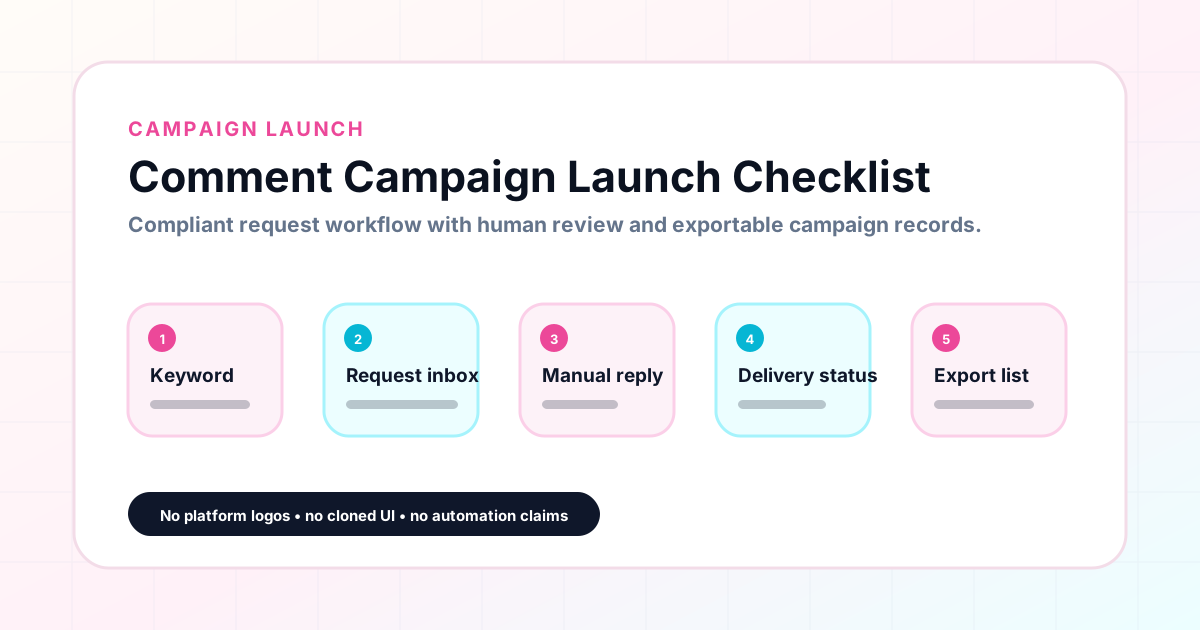
Comment Campaign Launch Checklist
12 min read
A comment campaign launch checklist ensures that nothing important gets skipped before an Instagram comment keyword campaign goes live. This guide is for creators, coaches, course creators, newsletters, agencies, small businesses, VAs, and campaign assistants who need a practical way to confirm the offer, keyword, delivery link, manual follow-up workflow, request tracking process, export plan, and compliance review before launch. The checklist is not about creating hype or promising outcomes. It is about reducing avoidable confusion once comments start arriving. A well-prepared campaign record helps the team know what keyword to watch, which lead magnet or offer is connected to the campaign, who owns manual follow-up, what status each request should move through, and when the export or report should be prepared. GramTrigger supports this workflow with structured campaign records. It does not claim automatic Instagram DMs, unauthorized automation, or platform partnership. Results depend on content, audience, offer, follow-up, platform rules, and execution.
GramTrigger methodology
Original operating system for Comment Campaign Launch Checklist
The GramTrigger method treats every comment campaign as an approval workflow, not an automation shortcut. The goal is to prepare the offer, lead magnet, keyword strategy, Reply Library draft, Request Inbox stages, handoff owner, and Lead Export fields before comments turn into operational work.
Campaign Blueprint SOP
Confirm the offer, lead magnet, keyword strategy, comment CTA, reply draft, owner, approval status, and Lead Export fields before launch.
Comment Funnel Workflow
Use the same path everywhere: Offer → Lead Magnet → AI Funnel Builder → Keyword Strategy → Comment CTA → Reply Draft → Review & Approval → Campaign Launch → Request Inbox → Lead Tracking → Export.
Approval Queue Workflow
Review caption CTA, pinned comment, reply draft, lead magnet link, compliance notes, and client approval before a campaign goes live.
Export Readiness Checklist
Export only after records have clear status, no sensitive private data, an owner, follow-up stage, and a documented next action.
Campaign Recovery Workflow
If requests are missed, pause new promotion, review pending records, update Reply Library drafts, communicate manually where appropriate, and document the process fix.
Decision framework
Use this matrix before choosing the next step.
Manual review reminder
Draft response — review before sending. Use approved tools and follow platform rules. GramTrigger helps plan and manage lead magnet workflows; it does not scrape users or auto-send unauthorized DMs.
Workflow Overview
Campaign Checklist
What a comment campaign launch checklist means
A comment campaign launch checklist is a readiness system for a keyword-based campaign. It defines what must be complete before the campaign changes from an idea to an active workflow. The checklist covers the campaign promise, the keyword, the destination link, the manual reply note, the request owner, the campaign status, the export plan, and the compliance review. It helps teams avoid launching a post that asks followers to comment a word before the resource is ready or before anyone knows who is handling follow-up.
For a creator, the checklist may prepare one GUIDE or TEMPLATE campaign. For a coach, it may prepare a worksheet, call, or waitlist campaign. For a course creator, it may prepare a webinar checklist or bonus request campaign. For an agency, it gives client campaigns the same quality-control process every time. The checklist does not prove campaign performance, revenue, sales, reach, engagement, or conversions. It simply improves readiness and follow-up organization.
Who should use this checklist
Creators should use this checklist when they run recurring lead magnet posts and want to avoid rebuilding the workflow each time. Coaches should use it when a post asks people to request a training, worksheet, discovery call, or waitlist. Course creators should use it before webinar, launch, bonus, and course preview campaigns. Newsletter operators should use it before sample issue, topic request, or resource list campaigns.
Agencies and social media managers should use this checklist before client campaigns because client work usually involves approvals, brand voice, and reporting expectations. Small businesses can use it for coupon, booking, event, or product-drop campaigns where the follow-up needs to be organized. VAs and campaign assistants can use it as a pre-flight review before they start monitoring requests. The checklist is most useful when multiple people need one shared answer to the same questions: what is the keyword, what is being delivered, who follows up, and when is the campaign ready?
Detailed step-by-step launch workflow
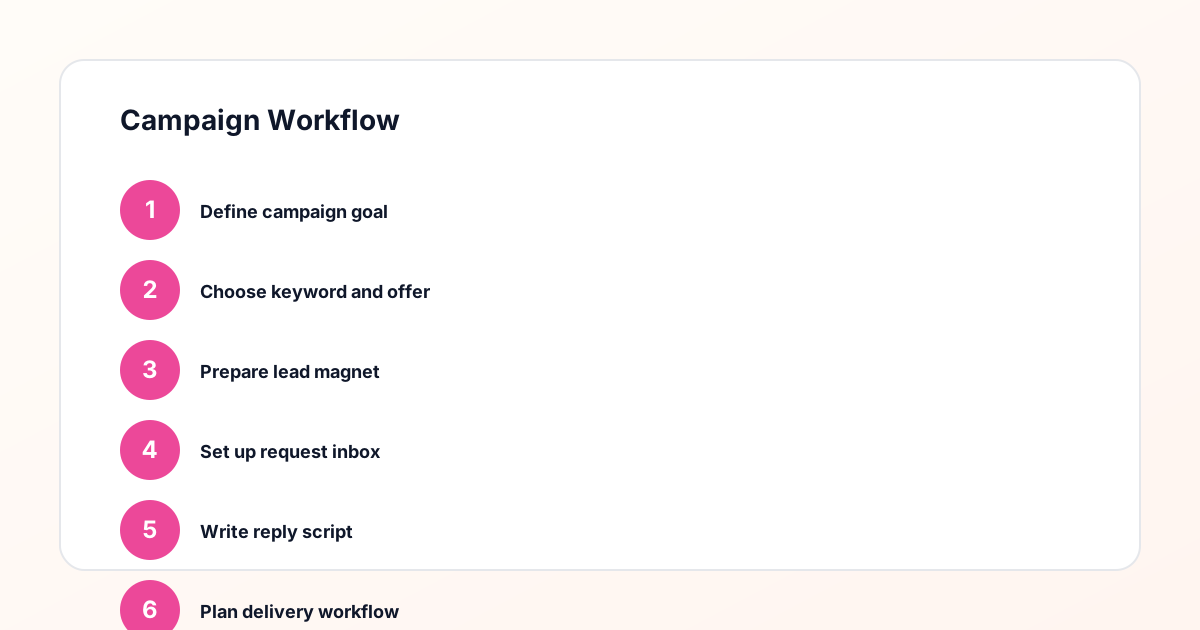
Step 1: confirm the campaign goal. Decide whether the campaign is collecting guide requests, waitlist interest, webinar checklist requests, coupon requests, booking interest, or newsletter opt-ins. One clear goal keeps the rest of the checklist focused.
Step 2: confirm the offer. The lead magnet or offer should already exist. If the resource is still being written, the campaign is not ready. A weak or vague offer makes request tracking less useful because the audience is not sure what they are asking for.
Step 3: choose the keyword. The keyword should directly match the promise. GUIDE, CHECKLIST, TEMPLATE, WAITLIST, WEBINAR, COUPON, or ISSUE can work when the word describes the offer. Avoid one keyword for several different resources.
Step 4: test the destination link. Visit the page, complete the opt-in or download path, and confirm the resource is accessible. Add [Delivery Link] to the campaign record only after it has been tested.
Step 5: write the manual follow-up note. The note should acknowledge the request, identify the resource, and explain the next step. Do not write language that implies automatic Instagram DMs or unauthorized automation.
Step 6: assign [Follow-Up Owner]. Someone must be responsible for watching requests, updating status, and handling manual follow-up. Without ownership, requests get missed.
Step 7: set campaign status. Use draft, ready, active, paused, complete, or needs review so everyone knows where the campaign stands.
Step 8: prepare the export plan. Decide which fields will be exported, when the export will happen, and who will clean it. Add [Export Date], [Status], and [Notes] before launch.
Prelaunch checklist template
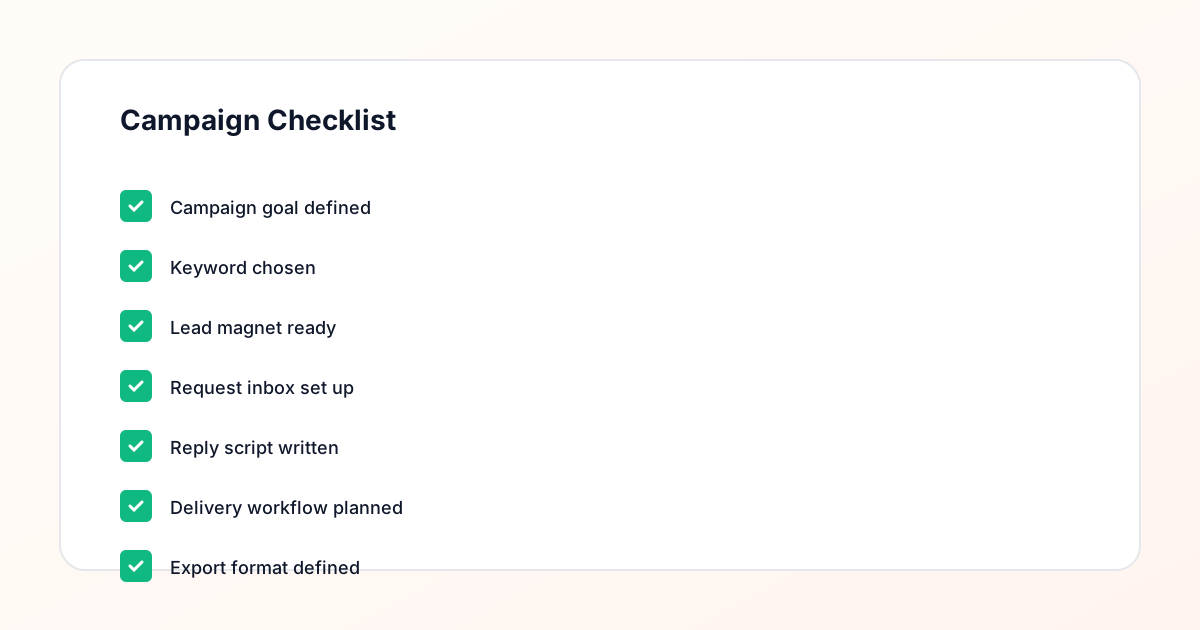
Use this template before publishing: [Campaign Name], [Keyword], [Lead Magnet], [Post URL], [Delivery Link], [Follow-Up Owner], [Reporting Period], [Export Date], [Status], and [Notes]. Under offer readiness, confirm that the resource exists, matches the post promise, and has a working destination. Under keyword readiness, confirm that the keyword is short, specific, easy to spell, and not already being used for a conflicting campaign. Under manual follow-up readiness, confirm that the reply note has been written, reviewed, and assigned to a person.
Under compliance readiness, confirm that the caption does not promise automatic DMs, guaranteed results, unauthorized automation, or platform partnership. Under tracking readiness, confirm that request statuses are defined before comments arrive. Under reporting readiness, confirm that the export fields and review cadence are known. For agency campaigns, add [Client Name], client approval status, brand voice notes, reporting format, and next review date.
Common launch mistakes to avoid
The first mistake is publishing before the delivery link is tested. A broken link creates manual cleanup and can make the campaign feel disorganized. The second mistake is choosing an unclear keyword. If followers comment INFO but the team is tracking a guide, a waitlist, and a webinar with the same word, requests become difficult to interpret. The third mistake is failing to assign a follow-up owner. If no one owns the request queue, response work slips.
The fourth mistake is reporting request count without status context. A campaign with many requests but many pending replies may need operational cleanup. The fifth mistake is skipping compliance review. Captions and reply notes should not imply automatic DMs, unauthorized automation, or guaranteed outcomes. The sixth mistake is failing to clean exports. Duplicate requests, unclear statuses, and missing notes make later reporting harder.
Practical examples
A coach offering a free worksheet can use the checklist to confirm the WORKSHEET keyword, destination link, and manual reply note before publishing. A course creator promoting a webinar checklist can confirm that CHECKLIST maps to the correct registration or resource page. An agency running a client campaign can collect client approval before the post goes live and assign a VA to request cleanup.
A newsletter operator can use the checklist before asking followers to comment ISSUE for a sample edition. A local business can use it before a COUPON or BOOK campaign so the offer and booking link are ready. A campaign assistant can use the checklist as a launch-day handoff document: if every field is complete, the campaign can move from ready to active.
How GramTrigger helps
GramTrigger helps turn the launch checklist into a campaign record. Instead of keeping the keyword in one note, the delivery link in a browser tab, the reply note in a chat thread, and the export plan in a spreadsheet, the campaign can be organized in one workflow. The request inbox and status tracking help the team know what still needs attention after launch. Manual follow-up support keeps the response note connected to the campaign. Exports help the team review what was requested and what needs cleanup.
GramTrigger is useful for creators managing one campaign and agencies managing many. It supports campaign organization, request tracking, status tracking, lead magnet delivery preparation, exports, and repeatable reporting workflows. It does not automatically send Instagram DMs and does not claim platform partnership or guaranteed outcomes.
CTA: launch with a cleaner workflow
Before your next comment campaign goes live, use this checklist to confirm the offer, keyword, destination link, manual follow-up owner, status workflow, export plan, and compliance language. GramTrigger helps you keep those pieces organized so requests do not disappear into comments, DMs, screenshots, or spreadsheet tabs. Start with one campaign record, track requests in one place, and export cleaner request lists when the campaign is ready for review.
Safe compliance disclaimer
GramTrigger is a campaign workflow and request-management tool. Fulfillment should be handled manually or through approved workflows available to the account. Review platform rules, consent requirements, privacy obligations, caption language, and follow-up practices before launch. Request counts and status metrics are workflow signals, not proof of revenue, sales, reach, engagement, conversions, or platform performance.
Compliance Note
GramTrigger helps organize Campaign Blueprints, Reply Library drafts, Request Inbox stages, approvals, delivery status, Lead Exports, and reports. Delivery should be handled manually or through approved tools depending on your account and available platform support.