
GramTrigger guide
Comment Trigger Campaign Management Without Messy Spreadsheets
Comment trigger campaign management is the work of keeping every keyword campaign organized from setup through export without losing requests, confusing offers, or overwhelming the team with disorganized tracking. Spreadsheets are the most common starting point, but they break down as campaigns multiply: there is no standard structure, links get pasted in wrong cells, scripts vary between rows, and status tracking becomes unreliable. GramTrigger replaces this spreadsheet approach with dedicated campaign records that hold every piece of information the team needs to run trigger campaigns cleanly. GramTrigger is a workflow and request-management tool, not an official Instagram or Meta product.
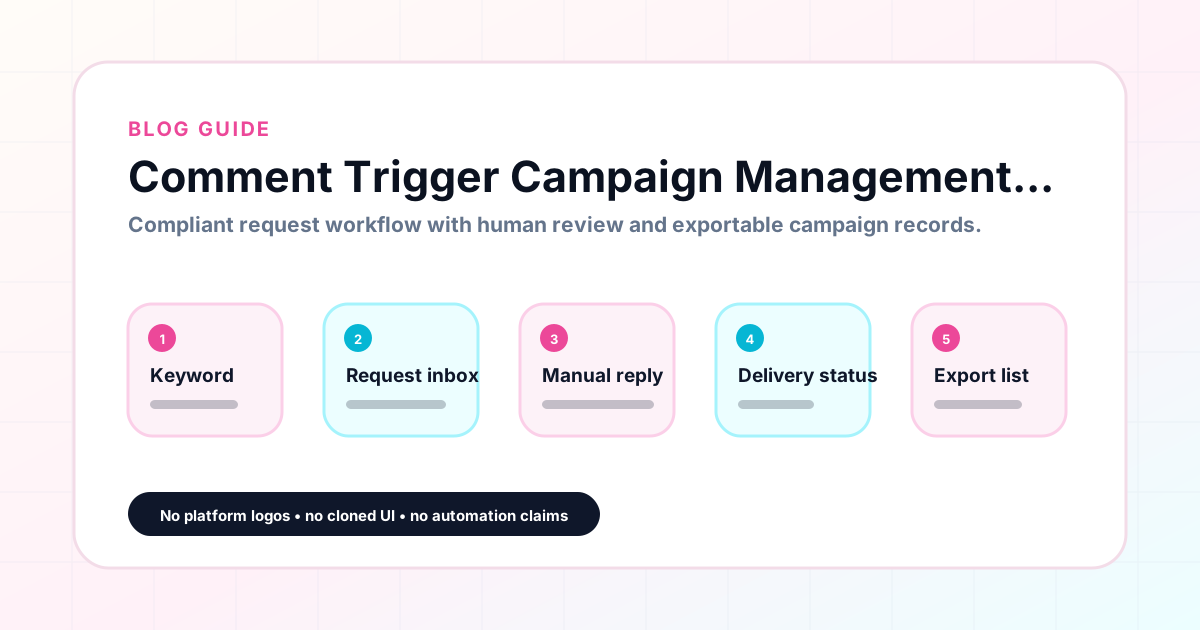
GramTrigger methodology
Original operating system for Comment Trigger Campaign Management Without Messy Spreadsheets
The GramTrigger method treats every comment campaign as an approval workflow, not an automation shortcut. The goal is to prepare the offer, lead magnet, keyword strategy, Reply Library draft, Request Inbox stages, handoff owner, and Lead Export fields before comments turn into operational work.
Campaign Blueprint SOP
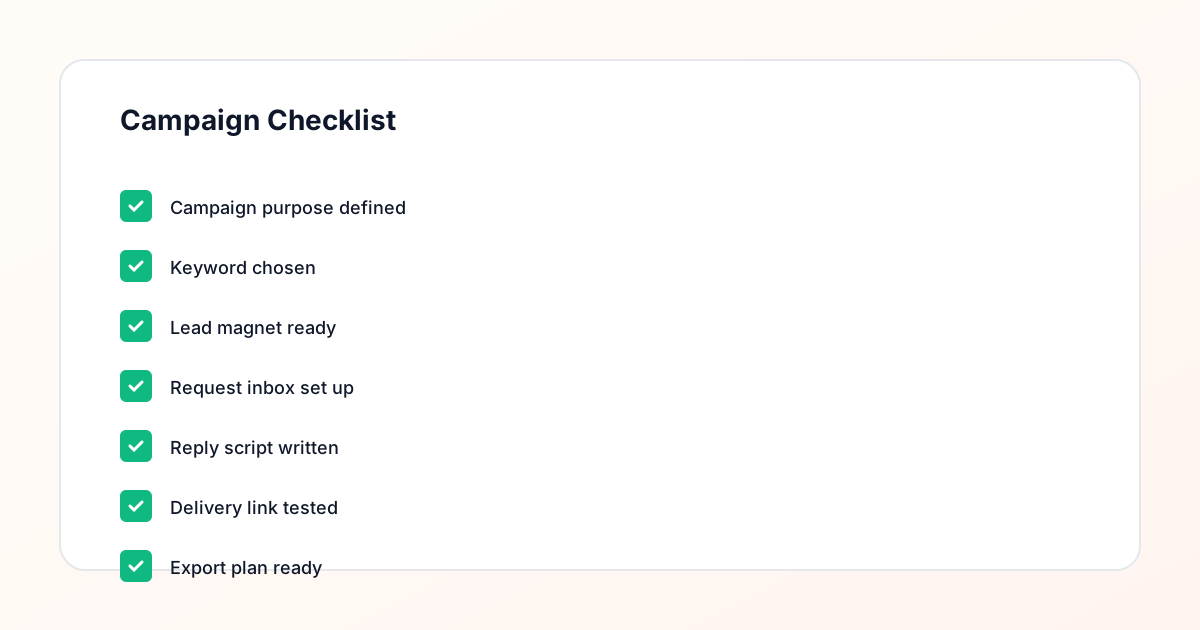
Confirm the offer, lead magnet, keyword strategy, comment CTA, reply draft, owner, approval status, and Lead Export fields before launch.
Comment Funnel Workflow
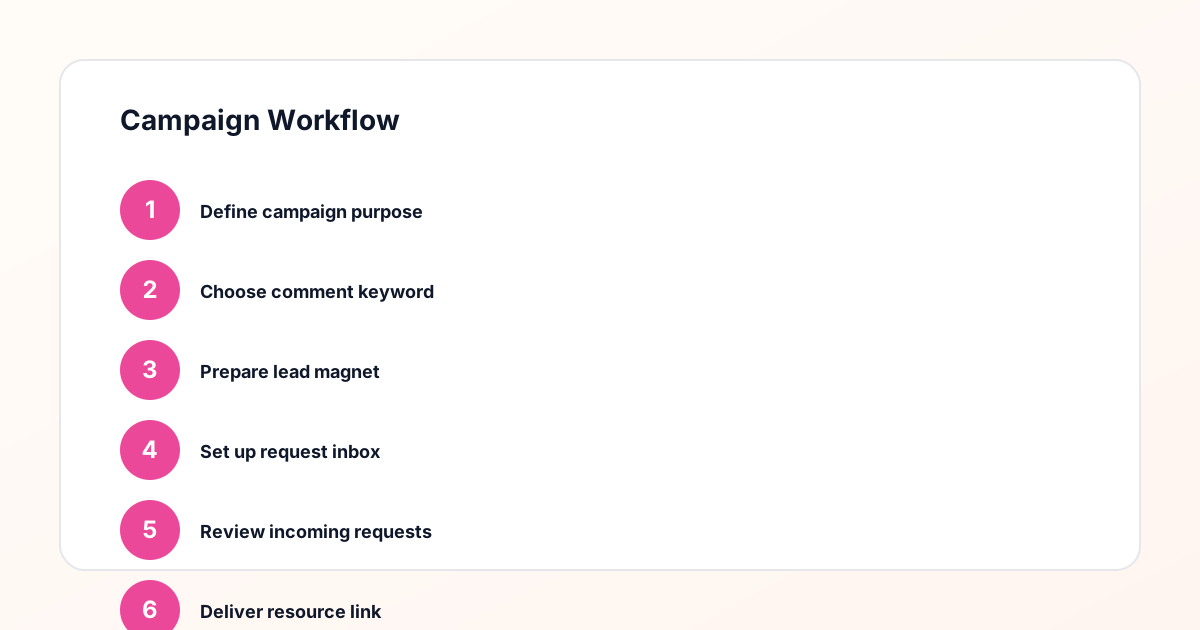
Use the same path everywhere: Offer → Lead Magnet → AI Funnel Builder → Keyword Strategy → Comment CTA → Reply Draft → Review & Approval → Campaign Launch → Request Inbox → Lead Tracking → Export.
Approval Queue Workflow
Review caption CTA, pinned comment, reply draft, lead magnet link, compliance notes, and client approval before a campaign goes live.
Export Readiness Checklist
Export only after records have clear status, no sensitive private data, an owner, follow-up stage, and a documented next action.
Campaign Recovery Workflow
If requests are missed, pause new promotion, review pending records, update Reply Library drafts, communicate manually where appropriate, and document the process fix.
Decision framework
Use this matrix before choosing the next step.
Manual review reminder
Draft response — review before sending. Use approved tools and follow platform rules. GramTrigger helps plan and manage lead magnet workflows; it does not scrape users or auto-send unauthorized DMs.
Workflow Overview
Campaign Checklist
Why spreadsheets fail comment trigger campaigns
Spreadsheets are flexible, which is their biggest limitation for comment trigger campaign management. There is no standard structure, so every creator invents their own columns. Links sit in cells without validation. Scripts are in text fields that do not display well on small screens. Status fields are free-form text that varies between rows. When a VA or agency team member needs to find the current destination link for a campaign, they have to know which spreadsheet, which tab, and which column to look in. GramTrigger imposes a consistent structure by design. Every campaign has the same fields in the same place. The keyword is in the keyword field. The script is in the script field. That consistency removes friction and reduces errors.
Building a campaign record for trigger campaigns
A campaign record for a comment trigger campaign includes the content reference, the trigger word, the destination, the response draft, the status, and the lead count. These are the operational pieces that make a trigger campaign runnable. When all six are confirmed before the post goes live, the team can begin fulfilling requests immediately without searching for information. GramTrigger creates this record structure for every campaign so that the same preparation steps happen in the same order every time. This repeatability is what makes it possible to manage ten or twenty trigger campaigns per month without the organizational overhead of rebuilding the system from scratch for each one.
Managing scripts across multiple trigger campaigns
One of the most common problems in comment trigger campaign management is inconsistent scripts. When creators write fulfillment messages on the fly or pull from memory, the script quality varies between responses. Some messages include the link; others do not. Some are warm and on-brand; others are rushed and generic. GramTrigger saves the response draft in the campaign record before the post launches so every response is consistent. For agencies managing trigger campaigns across multiple client accounts, this is especially important because the fulfillment tone and accuracy reflect on the client, not just the agency.
Status tracking across simultaneous campaigns
When multiple trigger campaigns are running simultaneously, status tracking is the only reliable way to know which campaigns still need active fulfillment and which are complete. Without clear statuses, the team risks continuing to fulfill a campaign that was supposed to close while leaving a newer campaign with pending requests unaddressed. GramTrigger provides campaign status fields — draft, ready, active, paused, complete — that are visible on the dashboard so everyone on the team knows the current state of every campaign. This shared status visibility is what makes it possible to coordinate fulfillment work across simultaneous campaigns without constant check-ins with the creator or account owner.
Exporting trigger campaign records
When a comment trigger campaign closes, the campaign record should be exported as a permanent archive. The export captures the trigger word, destination link, script, status, and lead count so that nothing is lost when the post fades from the feed. GramTrigger exports are available at any campaign stage so records can be archived proactively before engagement drops. These exports are useful for creator performance reviews, agency client reports, and long-term strategy analysis. Creators and agencies who export consistently build a campaign history that makes it straightforward to identify which trigger words, offer types, and post styles generate the most requests over time.
Scaling trigger campaign management
The organizational habits that work for two trigger campaigns per month become strained at ten or twenty. Spreadsheets get unwieldy. Notes apps lack structure. Group chats bury the current version of the script. GramTrigger scales with the creator or agency by providing the same consistent record format regardless of how many campaigns are running simultaneously. Adding a new campaign means creating a new record, not redesigning the tracking system. The dashboard shows all campaigns in one view. Exports work the same for every campaign. This structural consistency is what makes it possible to manage a growing volume of trigger campaigns without proportional growth in organizational overhead.
Compliance Note
GramTrigger helps organize Campaign Blueprints, Reply Library drafts, Request Inbox stages, approvals, delivery status, Lead Exports, and reports. Delivery should be handled manually or through approved tools depending on your account and available platform support.