GramTrigger guide
Best Instagram Lead Magnet Tools for Creators
Running a successful Instagram lead magnet campaign requires a set of coordinated tools: something to host the lead magnet, something to capture email addresses, something to publish and promote the post, and something to organize the campaign record and track fulfillment. Most creators use a combination of tools for these functions rather than a single all-in-one platform. This guide covers each category and what to look for in each. GramTrigger is a workflow and request-management tool, not an official Instagram or Meta product.
GramTrigger methodology
Original operating system for Best Instagram Lead Magnet Tools for Creators
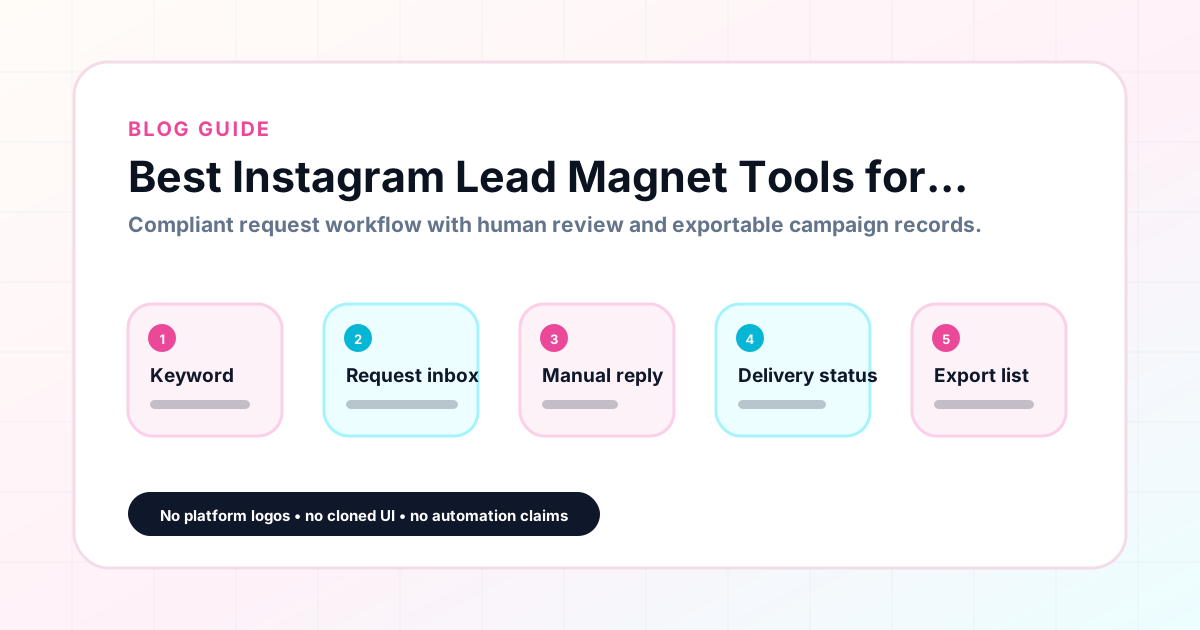
The GramTrigger method treats every comment campaign as an approval workflow, not an automation shortcut. The goal is to prepare the offer, lead magnet, keyword strategy, Reply Library draft, Request Inbox stages, handoff owner, and Lead Export fields before comments turn into operational work.
Campaign Blueprint SOP
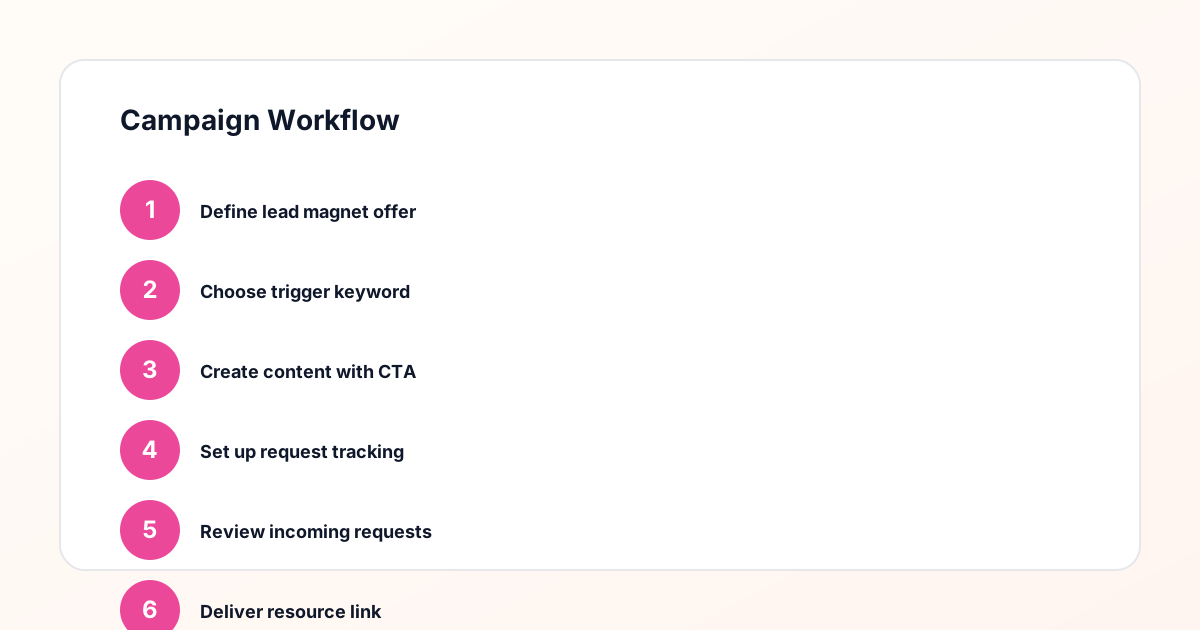
Confirm the offer, lead magnet, keyword strategy, comment CTA, reply draft, owner, approval status, and Lead Export fields before launch.
Comment Funnel Workflow
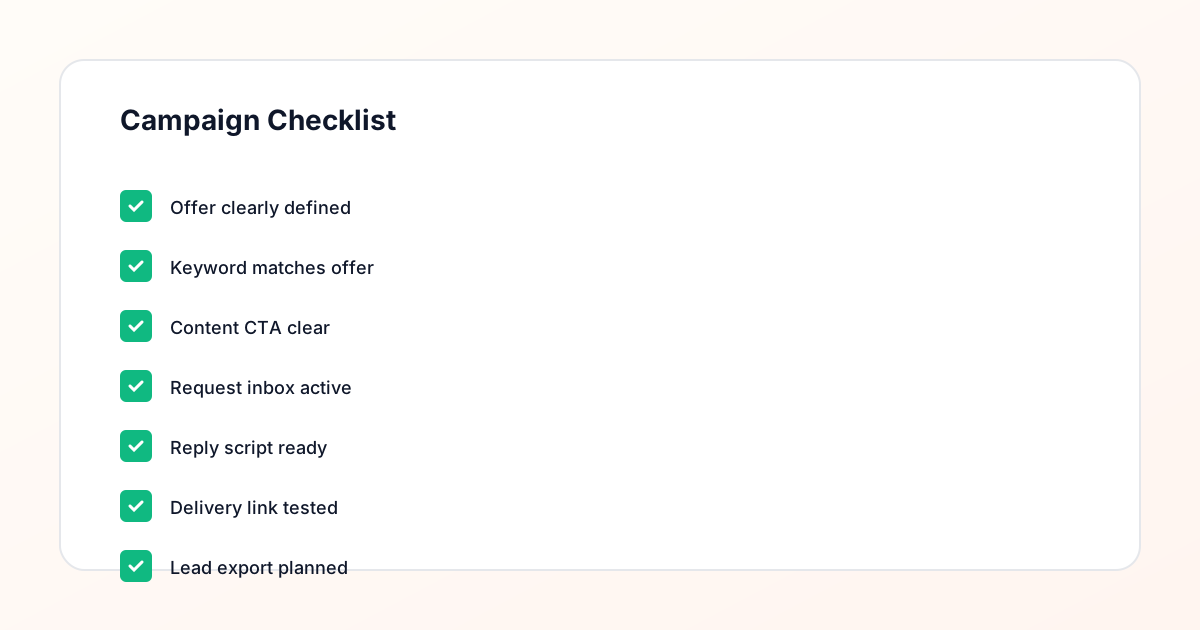
Use the same path everywhere: Offer → Lead Magnet → AI Funnel Builder → Keyword Strategy → Comment CTA → Reply Draft → Review & Approval → Campaign Launch → Request Inbox → Lead Tracking → Export.
Approval Queue Workflow
Review caption CTA, pinned comment, reply draft, lead magnet link, compliance notes, and client approval before a campaign goes live.
Export Readiness Checklist
Export only after records have clear status, no sensitive private data, an owner, follow-up stage, and a documented next action.
Campaign Recovery Workflow
If requests are missed, pause new promotion, review pending records, update Reply Library drafts, communicate manually where appropriate, and document the process fix.
Decision framework
Use this matrix before choosing the next step.
Manual review reminder
Draft response — review before sending. Use approved tools and follow platform rules. GramTrigger helps plan and manage lead magnet workflows; it does not scrape users or auto-send unauthorized DMs.
Workflow Overview
Campaign Checklist
Lead magnet hosting and delivery tools
The lead magnet itself — whether it is a PDF guide, a Notion template, a Canva template, or a video training — needs to be hosted somewhere accessible and delivered to the follower after they complete the opt-in. Common hosting options include Google Drive or Dropbox for simple file sharing, ConvertKit or similar platforms for email-gated delivery where the follower opts in to receive the file, dedicated course platforms for video trainings, and the creator's own website. The hosting choice affects the destination link used in the campaign — whether the follower is sent directly to a download page or to an opt-in form that delivers the resource via email. Both models work; the choice depends on whether building the email list is a priority alongside resource delivery.
Email list building tools
For most lead magnet campaigns, building an email list alongside resource delivery is the primary goal. Email marketing platforms that support opt-in forms and automated resource delivery include ConvertKit (now Kit), Beehiiv, Mailchimp, ActiveCampaign, and others. These platforms provide the landing page or opt-in form that serves as the destination link for the comment keyword campaign. When a follower visits the destination and completes the opt-in, they are added to the email list. The email platform handles the actual resource delivery — typically through an automated welcome email containing the download link. Choosing an email tool that is easy to set up and integrates with the creator's content strategy is more important than choosing the most feature-rich option.
Campaign record management tools
Managing the operational details of a comment keyword campaign — the trigger keyword, the destination link, the response draft, the status, and the lead count — requires a campaign management tool that is separate from the email platform and the hosting tool. GramTrigger fills this role, providing structured campaign records that organize the operational workflow for every comment campaign. Without a dedicated campaign management tool, these details end up in a patchwork of notes, messages, and spreadsheets that create inconsistency and require significant cleanup before they can be used for reporting. GramTrigger is purpose-built for this specific role in the Instagram lead magnet campaign workflow.
Content creation tools for lead magnets
The lead magnet itself needs to be created before the campaign launches. Common creation tools include Canva for visual templates and guides, Notion for text-based templates and knowledge bases, Google Docs for written guides and checklists, Loom for video recordings, and standard presentation tools for slide-based content. The quality of the lead magnet is one of the strongest drivers of campaign performance — a lead magnet that genuinely solves a specific problem for the audience generates more requests, more opt-ins, and more downstream conversions than a generic resource. Investing time in creating a genuinely useful lead magnet before launching the campaign is one of the highest-leverage uses of pre-campaign effort.
Link management and validation tools
The destination link in a comment keyword campaign needs to be working, accurate, and up to date throughout the campaign. A broken link during a high-traffic campaign window creates a frustrating experience for leads and reflects poorly on the creator. Testing the destination link before the post goes live is a basic pre-launch requirement. GramTrigger stores the destination link in the campaign record as the single source of truth, so updating it when the destination changes is straightforward and takes effect immediately for all team members. Some creators use URL shorteners or tracking links to monitor destination traffic separately from the campaign record data, which provides an additional data point on how many of the fulfilled leads actually visited the destination.
Analytics and performance tracking tools
Understanding how well an Instagram lead magnet campaign performed requires data from multiple sources. Instagram provides engagement and reach data for the post itself. GramTrigger provides the campaign record data — keyword, lead count, status, and export. The email platform provides opt-in and delivery data for leads who completed the opt-in. Combining these three data sources gives a complete picture of campaign performance from the first comment through the final email delivery. For creators who want to invest in more detailed performance analysis, UTM parameters on the destination link allow Google Analytics or similar tools to track traffic from the campaign and compare it to other traffic sources on the creator's website or landing page.
Team and delegation tools
For creator businesses with team members handling campaign fulfillment, the most important tool is the campaign record itself — well-organized in GramTrigger so that team members can access everything they need without requiring the creator's involvement in each response. Supplementary tools like Slack for team communication and Notion for shared playbooks can be useful for broader team coordination, but they should not be the primary home for campaign-specific information. The campaign record in GramTrigger should be self-contained for fulfillment purposes: keyword, link, script, and status all in one place that any authorized team member can access and update.
Building the right lead magnet tool stack
The ideal Instagram lead magnet tool stack for most creators includes a content creation tool for building the resource, an email platform for opt-in capture and delivery, a campaign management tool like GramTrigger for operational record-keeping and lead tracking, and Instagram itself for publishing and fulfillment. Optional additions include URL tracking tools for destination analytics and team communication tools for larger creator businesses. This four-category stack covers the full workflow from resource creation through post-campaign reporting. Most creators can assemble this stack for a modest monthly cost using tools they may already have for other purposes, with GramTrigger handling the campaign management role that the other tools in the stack are not designed for.
Compliance Note
GramTrigger helps organize Campaign Blueprints, Reply Library drafts, Request Inbox stages, approvals, delivery status, Lead Exports, and reports. Delivery should be handled manually or through approved tools depending on your account and available platform support.