Coaches
Instagram Lead Magnet Strategy for Coaches
12 min read
For coaches, Instagram is more than a content platform — it is a client acquisition channel. But turning followers into coaching clients requires a bridge, and that bridge is a lead magnet. A well-chosen free resource demonstrates your expertise, builds trust, and gives prospects a reason to start a conversation. When paired with a comment keyword campaign, the lead magnet becomes the engine of a repeatable, compliance-aware workflow. This guide covers how coaches can plan free resources, choose keywords, manage requests, deliver resources, and follow up with prospects — all through a structured, manual-review process that protects your reputation and your account.

GramTrigger methodology
Original operating system for Instagram Lead Magnet Strategy for Coaches
The GramTrigger method treats every comment campaign as an approval workflow, not an automation shortcut. The goal is to prepare the offer, lead magnet, keyword strategy, Reply Library draft, Request Inbox stages, handoff owner, and Lead Export fields before comments turn into operational work.
Campaign Blueprint SOP
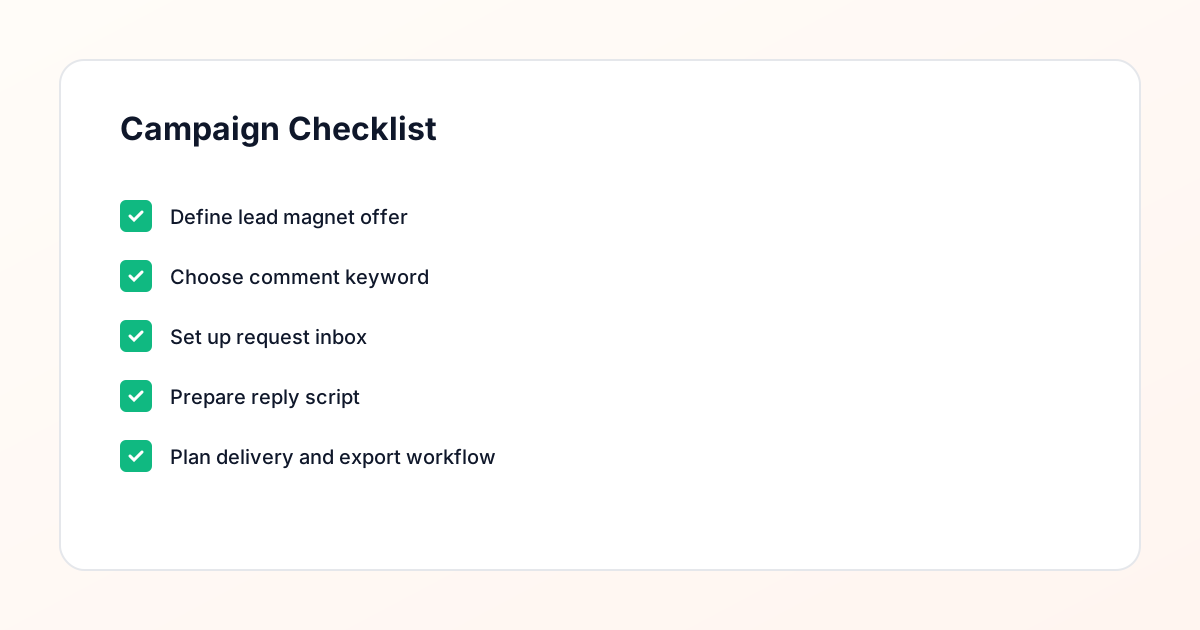
Confirm the offer, lead magnet, keyword strategy, comment CTA, reply draft, owner, approval status, and Lead Export fields before launch.
Comment Funnel Workflow
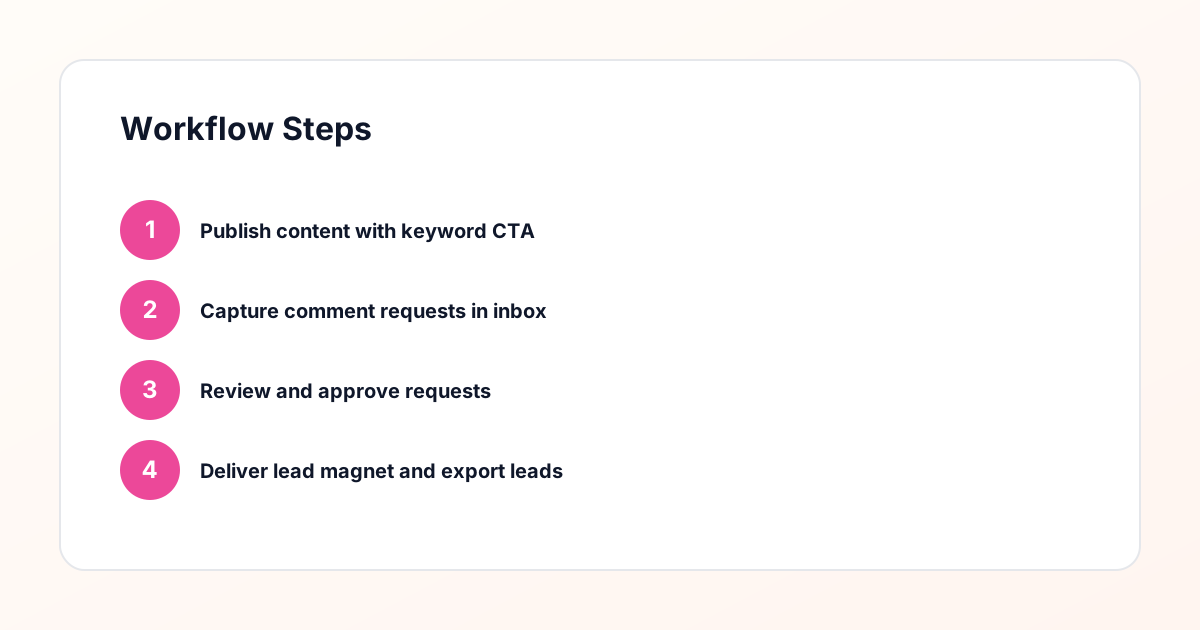
Use the same path everywhere: Offer → Lead Magnet → AI Funnel Builder → Keyword Strategy → Comment CTA → Reply Draft → Review & Approval → Campaign Launch → Request Inbox → Lead Tracking → Export.
Approval Queue Workflow
Review caption CTA, pinned comment, reply draft, lead magnet link, compliance notes, and client approval before a campaign goes live.
Export Readiness Checklist
Export only after records have clear status, no sensitive private data, an owner, follow-up stage, and a documented next action.
Campaign Recovery Workflow
If requests are missed, pause new promotion, review pending records, update Reply Library drafts, communicate manually where appropriate, and document the process fix.
Decision framework
Use this matrix before choosing the next step.
Manual review reminder
Draft response — review before sending. Use approved tools and follow platform rules. GramTrigger helps plan and manage lead magnet workflows; it does not scrape users or auto-send unauthorized DMs.
Workflow Overview
Campaign Checklist
Why Coaches Need a Lead Magnet Strategy
Coaching is a trust-based sale. Prospects need to believe you understand their problem, that your method works, and that you are the right person to guide them. A lead magnet accelerates that trust-building process. It gives prospects a sample of your expertise before they commit to a call or a package. On Instagram, where attention is fleeting, a lead magnet turns a passive follower into an active lead. The comment keyword workflow makes the process seamless: a follower types a word, and your system captures the request. From there, a manual review ensures every message is relevant, personalized, and compliant. The lead magnet is not just a freebie — it is the first step in your coaching funnel.
Choosing the Right Free Resource
The best lead magnet for a coach solves a specific, immediate problem for a specific audience. A life coach might offer a "Values Clarification Worksheet." A business coach could share a "90-Day Goal-Setting Template." A health coach might create a "7-Day Anti-Inflammatory Meal Plan." The format should match the depth of the problem — a worksheet for a reflective exercise, a template for a planning need, a guide for a knowledge gap. The resource should also showcase your coaching style. If you are data-driven, include frameworks and metrics. If you are empathetic, include reflective prompts and stories. The lead magnet is your audition — make it count.
Lead Magnet Ideas for Life Coaches
Life coaches serve audiences navigating transitions, seeking clarity, or working on personal growth. Effective lead magnets include a "Limiting Beliefs Audit," a "Morning Routine Designer," a "Decision-Making Framework," or a "Boundary-Setting Script Pack." Each of these addresses a common coaching topic and gives the prospect an immediate tool to use. Pair the resource with a keyword like "AUDIT," "ROUTINE," or "SCRIPT" and promote it in posts about the relevant topic. When requests come into your inbox, review each one, confirm the contact is a good fit, and deliver the resource with a personal note about why you created it.
Lead Magnet Ideas for Business Coaches
Business coaches serve entrepreneurs, freelancers, and corporate professionals looking to grow revenue, improve operations, or advance their careers. Strong lead magnets include a "Pricing Strategy Calculator," a "Client Onboarding Checklist," a "Quarterly Business Review Template," or a "LinkedIn Content Planner." These resources solve tactical problems and demonstrate your strategic thinking. Use a keyword like "PRICING," "ONBOARD," or "PLAN" and manage the campaign through your request inbox. The manual review step lets you identify which contacts are business owners versus employees versus students — information that shapes your follow-up.
Lead Magnet Ideas for Health and Wellness Coaches
Health and wellness coaches serve audiences focused on fitness, nutrition, mental health, or holistic wellbeing. Effective lead magnets include a "Macro-Friendly Recipe eBook," a "Stress-Management Toolkit," a "Sleep Optimization Guide," or a "30-Day Movement Challenge." These resources are actionable and aligned with the coaching niche. Use a keyword like "RECIPE," "TOOLKIT," or "CHALLENGE" and capture requests in your inbox. The delivery workflow should include a brief health disclaimer and an invitation to share any questions — this sets the tone for a supportive, professional relationship.
Choosing the Right Keyword for Your Campaign
The keyword should be short, memorable, and directly tied to the lead magnet. "WORKSHEET" works for a reflective exercise. "CALCULATOR" works for a pricing tool. "GUIDE" works for a comprehensive resource. Avoid generic words like "MORE" or "INFO" that do not signal what the contact is requesting. Test the keyword in a few posts and monitor the request volume in your inbox. If the keyword feels awkward to include in a caption, it will feel awkward for your audience to type. The best keywords feel like a natural part of the conversation.
Setting Up Your Request Inbox
Once your lead magnet and keyword are ready, configure your request inbox to capture every comment. The inbox should display the commenter's handle, the post URL, the keyword, and the timestamp. Create a message template for the delivery: a greeting, a confirmation of the resource, the link, and a brief note about your coaching approach. The template saves time, but you should personalize every message before sending. The manual review step is what makes the workflow compliance-aware and effective. It also lets you flag high-potential contacts for priority follow-up.
Reviewing Requests Before Delivery
Before sending any message, review the contact's profile. Confirm the account is real, the keyword matches the campaign, and the contact has not already received the resource. Check whether the contact's bio or recent posts suggest they are in your target audience. If they are, deliver the resource with a personalized note. If they are not — for example, a student who is not yet a potential coaching client — you can still deliver the resource but adjust your follow-up expectations. The review step ensures your time is spent on the most promising leads while still being generous with everyone who asks.
Delivering the Resource With a Personal Touch
The delivery message is your first direct interaction with the lead. Make it count. Use their name, reference the post they commented on, and explain why you created the resource. For example: "Hey Sarah, thanks for commenting WORKSHEET on my post about limiting beliefs. I created this audit because I saw so many clients stuck on the same mental blocks. Here's the link: [LINK]. I'd love to hear what comes up for you as you work through it." This message is warm, specific, and opens the door for a reply. It also sets the tone for the coaching relationship — attentive, insightful, and human.
Following Up With Prospects
The follow-up is where coaching leads are won or lost. After delivering the resource, plan a sequence of touchpoints: a check-in at 48 hours to see if they had questions, a value-add message at 5 days with a related tip or story, and a soft invitation at 10 days to book a discovery call. Each message should be reviewed before sending, just like the initial delivery. Your request inbox should track which contacts have been followed up with and when, so no one is forgotten. The follow-up is not pushy — it is a continuation of the conversation you started with the lead magnet.
Converting Leads Into Coaching Clients
The goal of the lead magnet is not just to grow your email list — it is to start conversations that lead to coaching engagements. When a prospect replies to your follow-up message with a question or a challenge they are facing, that is your opening. Respond with empathy, share a brief insight, and invite them to a discovery call to explore further. The call is where you assess fit, explain your coaching packages, and answer questions. The lead magnet and the follow-up sequence warm the prospect up, but the call is where the relationship becomes real. Track how many leads from each campaign book calls and how many convert to clients — this data tells you which lead magnets are most effective.
Measuring the Success of Your Strategy
Track five metrics to evaluate your coaching lead magnet strategy: keyword comments per post, requests delivered, reply rate, discovery calls booked, and clients converted. If comments are high but delivery is low, your review process may be too strict or your keyword may be attracting bots. If delivery is high but reply rate is low, your message copy or follow-up timing may need adjustment. If reply rate is high but calls booked is low, your follow-up may not be leading clearly to the next step. Review these metrics after each campaign and refine the workflow based on what you learn.
Compliance Note
GramTrigger helps organize Campaign Blueprints, Reply Library drafts, Request Inbox stages, approvals, delivery status, Lead Exports, and reports. Delivery should be handled manually or through approved tools depending on your account and available platform support.