
Email List Building
Instagram Comment Funnel for Building an Email List
10 min read
Building an email list from Instagram is one of the highest-leverage moves a creator or business can make. Instagram gives you reach, but email gives you ownership. The challenge has always been moving people from one to the other efficiently. The comment funnel solves this by turning Instagram comments into structured lead capture events. Instead of hoping people click a link in your bio, you ask them to comment a keyword, which creates a request that flows through a review process, a lead magnet delivery, and ultimately onto your email list. This guide covers the full funnel — from planning your lead magnet and choosing keywords, to managing the request inbox, delivering resources, and following up to convert commenters into subscribers. If you have been relying on link-in-bio strategies and wondering why your email list growth from Instagram feels slow, the comment funnel is the upgrade.

GramTrigger methodology
Original operating system for Instagram Comment Funnel for Building an Email List
The GramTrigger method treats every comment campaign as an approval workflow, not an automation shortcut. The goal is to prepare the offer, lead magnet, keyword strategy, Reply Library draft, Request Inbox stages, handoff owner, and Lead Export fields before comments turn into operational work.
Campaign Blueprint SOP
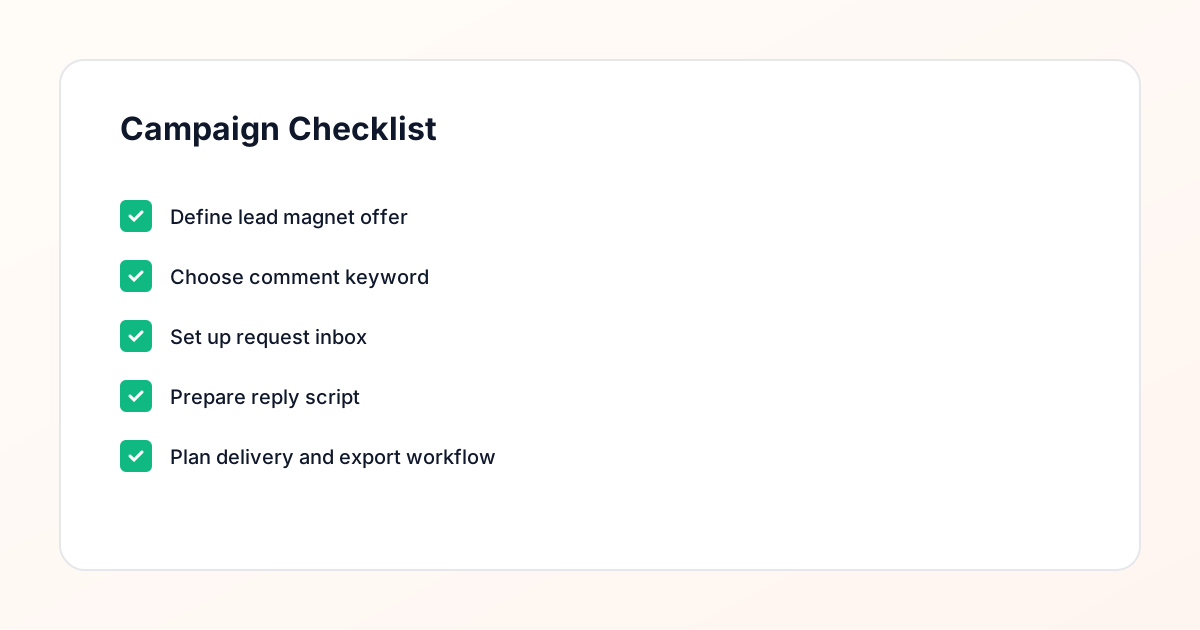
Confirm the offer, lead magnet, keyword strategy, comment CTA, reply draft, owner, approval status, and Lead Export fields before launch.
Comment Funnel Workflow
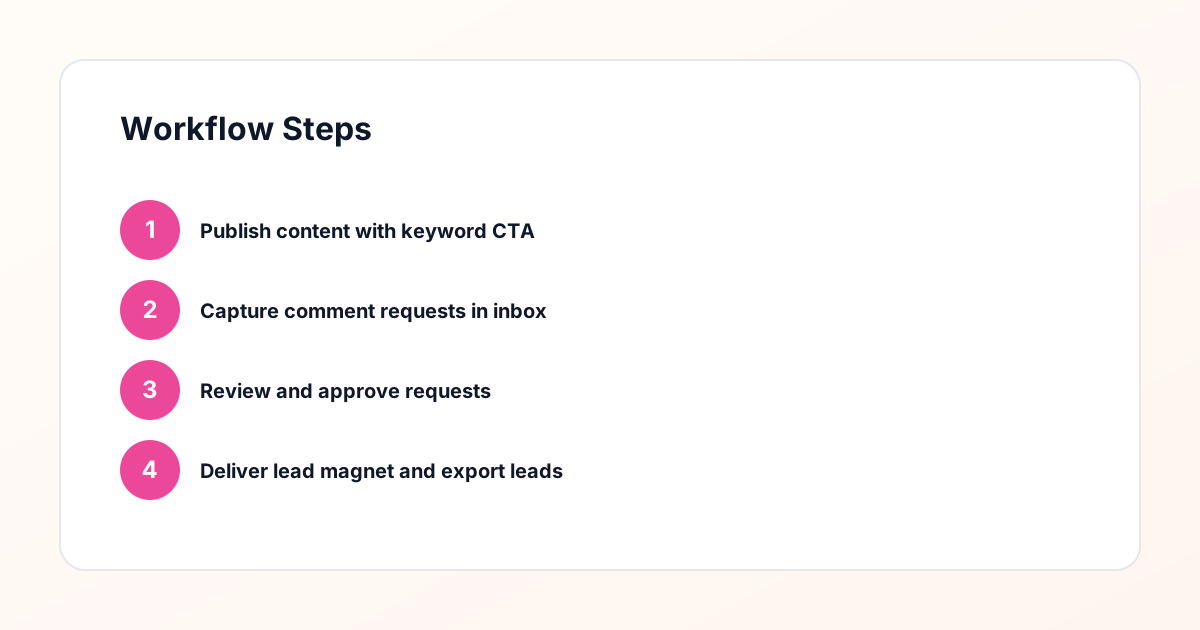
Use the same path everywhere: Offer → Lead Magnet → AI Funnel Builder → Keyword Strategy → Comment CTA → Reply Draft → Review & Approval → Campaign Launch → Request Inbox → Lead Tracking → Export.
Approval Queue Workflow
Review caption CTA, pinned comment, reply draft, lead magnet link, compliance notes, and client approval before a campaign goes live.
Export Readiness Checklist
Export only after records have clear status, no sensitive private data, an owner, follow-up stage, and a documented next action.
Campaign Recovery Workflow
If requests are missed, pause new promotion, review pending records, update Reply Library drafts, communicate manually where appropriate, and document the process fix.
Decision framework
Use this matrix before choosing the next step.
Manual review reminder
Draft response — review before sending. Use approved tools and follow platform rules. GramTrigger helps plan and manage lead magnet workflows; it does not scrape users or auto-send unauthorized DMs.
Workflow Overview
Campaign Checklist
Why the Comment Funnel Outperforms Link in Bio
The link-in-bio approach has a fundamental friction problem. A follower sees your content, feels interested, taps your profile, finds the link, taps it, waits for a page to load, and then decides whether to opt in. Each step loses people. The comment funnel collapses most of those steps into a single action: typing a word in the comments. That keyword comment becomes a request that enters your workflow, and from there you deliver the resource directly through a DM conversation. The friction is dramatically lower, which is why creators who switch from link-in-bio to comment keyword campaigns consistently report higher lead capture rates. The comment funnel also creates a visible social proof loop — when other followers see a post with dozens of keyword comments, it signals that the resource is worth requesting, which drives even more comments. This compound effect is something link-in-bio strategies simply cannot replicate.
Planning Your Lead Magnet for the Comment Funnel
The lead magnet is the engine of the entire funnel. If the resource is not compelling enough to motivate someone to comment a keyword, nothing else in the workflow matters. Start by identifying a specific problem your audience faces that you can solve with a focused, actionable resource. Templates, checklists, mini-guides, swipe files, and tool lists tend to work well because they offer immediate practical value. The resource should be directly related to the content piece that promotes it — if your carousel is about email subject lines, your lead magnet should be a subject line template pack, not a generic marketing ebook. Specificity increases perceived value. Also consider the format carefully. A PDF that someone has to download and open later creates more friction than a Google Doc they can view instantly or a simple webpage with the content right there. The easier the resource is to access after delivery, the higher your conversion rate from DM to actual consumption will be.
Designing the Keyword and Call to Action
Your keyword and call to action need to work together as a clear, unambiguous instruction. The keyword should be a single word that relates to the resource — "SUBJECT" for an email subject line template, "BUDGET" for a budget spreadsheet, "LAUNCH" for a product launch checklist. The call to action should tell people exactly what to do: "Comment SUBJECT and I will send you the template." Place this instruction in multiple locations — the caption, the last slide of a carousel, the end of a Reel, and even in the first comment. Repetition is not annoying here; it is necessary because many people only skim part of your content. The more places they see the instruction, the more likely they are to act on it. Keep the language simple and direct. Avoid clever wordplay or indirect phrasing that might confuse people about what they need to do.
Managing the Request Inbox
As keyword comments arrive, they populate your request inbox — the central hub of the comment funnel. Each request contains the commenter information, the post they engaged with, the keyword they used, and the time of the comment. A well-managed request inbox lets you see the full pipeline of interested followers at a glance. You can identify which posts are generating the most requests, spot patterns in when comments come in, and track your progress through the review and delivery steps. Without this organized view, you are working blind — manually checking comments, losing track of who you have messaged, and inevitably missing people who commented hours ago. GramTrigger organizes all incoming keyword comments into a unified request inbox with filtering and status tracking. This structure is what separates a professional comment funnel from a chaotic scramble through comment sections, and it becomes especially critical as your campaigns scale and request volumes grow.
The Review Process Before Delivery
Before you deliver anything to a commenter, there should be a review step. This is where you look at each request and decide whether to proceed. Review serves multiple purposes: it filters out bot accounts and spam comments, it lets you verify that the person genuinely engaged with your content, and it gives you a chance to personalize your delivery message. This manual approval process is a core part of what makes the comment funnel a compliance-aware approach rather than a brute-force automation. When you review requests, you are making a deliberate choice to engage with each person, which keeps your account activity looking natural and intentional. GramTrigger builds this review step directly into the workflow. Every request waits in your inbox until you approve it. There is no automatic messaging happening in the background — you are always in control of what goes out and to whom.
Delivering the Lead Magnet via DM
Once a request is approved, you deliver the lead magnet through a direct message. The message should feel like a natural continuation of the conversation, not a marketing blast. Reference the post they commented on, acknowledge their interest, and provide the link to the resource. A good delivery message might look like: "Hey [name], thanks for your interest in the subject line templates! Here you go: [link]. These are the exact ones I use — let me know if you have any questions." This personal touch increases the likelihood that the person will actually open and use the resource, which matters because a downloaded lead magnet that never gets opened does not move anyone closer to your email list. The delivery step is also where you can set expectations for what comes next. Mentioning your email list naturally in the delivery message — "I share new templates every week on my email list if you want more" — plants the seed for the follow-up without being pushy.
The Follow-Up That Converts to Email Subscribers
The follow-up message is where the comment funnel actually achieves its goal of building your email list. One to three days after delivering the lead magnet, send a message checking in. Ask whether they had a chance to look at the resource, offer to answer any questions, and then extend the invitation to join your email list. Frame the email list in terms of what they will get — more resources like the one they just downloaded, exclusive content, early access to new materials. The people who reach this point in the funnel have already demonstrated interest twice: once by engaging with your content and once by commenting the keyword. They are warm leads, and a thoughtful follow-up is often the nudge they need to subscribe. GramTrigger helps you track which requests have been delivered and which are pending follow-up, so no one falls through the cracks in your funnel.
Connecting the Funnel to Your Email Platform
The final technical step is connecting your comment funnel output to your email platform. When someone subscribes through your follow-up, they should enter an email sequence that continues delivering value and building the relationship. This could be a welcome series that expands on the lead magnet topic, a weekly newsletter, or a nurture sequence that eventually introduces a paid offer. The key is that the transition from Instagram DM to email subscriber feels seamless. The person should feel like they are continuing the same conversation in a different channel, not starting over with an unfamiliar brand. Your email content should reference the Instagram interaction and the specific resource they downloaded, which reinforces the connection and reduces unsubscribe rates.
Scaling the Funnel Across Multiple Campaigns
Once you have one comment funnel running successfully, the natural next step is to scale. Run different lead magnets on different posts, each with its own keyword. A fitness coach might use "MEALS" on a nutrition post and "WORKOUT" on a training post, driving people to two different resources that both feed into the same email list. An agency might run comment funnels for multiple clients simultaneously, each with distinct keywords and lead magnets. GramTrigger supports this kind of multi-campaign management through its campaign organization features. Each campaign has its own keyword, request tracking, and delivery workflow, so nothing gets crossed. The ability to run parallel funnels multiplies your lead capture potential without multiplying your operational complexity, because the underlying workflow remains the same regardless of how many campaigns are active.
Measuring Funnel Performance Over Time
To improve your comment funnel, you need to measure it. Track the number of keyword comments per post, the number of requests reviewed and approved, the number of lead magnets delivered, the number of follow-ups sent, and the number of email list conversions. These metrics tell you where the funnel is strong and where it is leaking. If many people comment but few requests get approved, your content may be attracting the wrong audience. If many lead magnets are delivered but few follow-ups result in email signups, your follow-up messaging or email list positioning may need adjustment. Export your request data regularly to build a historical record of campaign performance. Over time, this data reveals which content formats, keywords, lead magnets, and follow-up approaches produce the best results, allowing you to refine the funnel continuously.
Compliance Note
GramTrigger helps organize Campaign Blueprints, Reply Library drafts, Request Inbox stages, approvals, delivery status, Lead Exports, and reports. Delivery should be handled manually or through approved tools depending on your account and available platform support.