
Examples
Instagram Comment Campaign Examples for Lead Magnets
10 min read
Theory is useful, but examples are where real learning happens. This guide walks through seven different Instagram comment campaign examples across a range of niches and business models. For each example, we break down the content format, the keyword chosen, the lead magnet offered, the request management approach, the delivery workflow, and the follow-up strategy. These examples cover solo creators, coaches, agencies, digital product sellers, and service providers — so regardless of your business model, you will see a campaign structure that maps to your situation. Each example is designed to show how the comment keyword workflow operates in practice, from the initial content post through to the final email list conversion. Use these as templates you can adapt for your own campaigns.

GramTrigger methodology
Original operating system for Instagram Comment Campaign Examples for Lead Magnets
The GramTrigger method treats every comment campaign as an approval workflow, not an automation shortcut. The goal is to prepare the offer, lead magnet, keyword strategy, Reply Library draft, Request Inbox stages, handoff owner, and Lead Export fields before comments turn into operational work.
Campaign Blueprint SOP
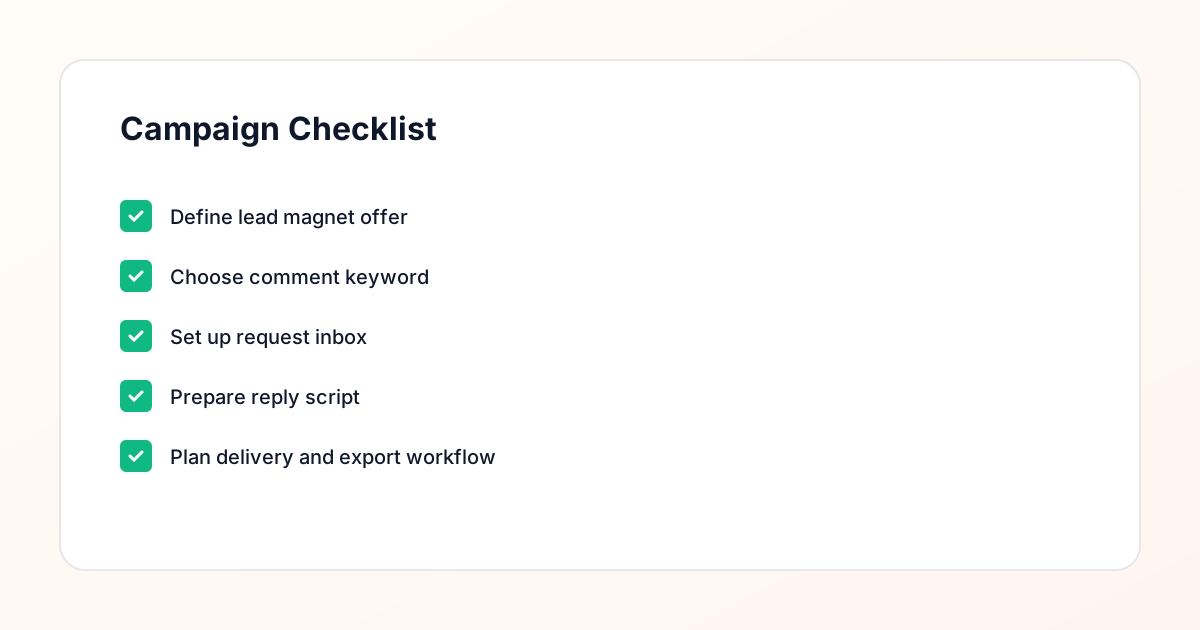
Confirm the offer, lead magnet, keyword strategy, comment CTA, reply draft, owner, approval status, and Lead Export fields before launch.
Comment Funnel Workflow
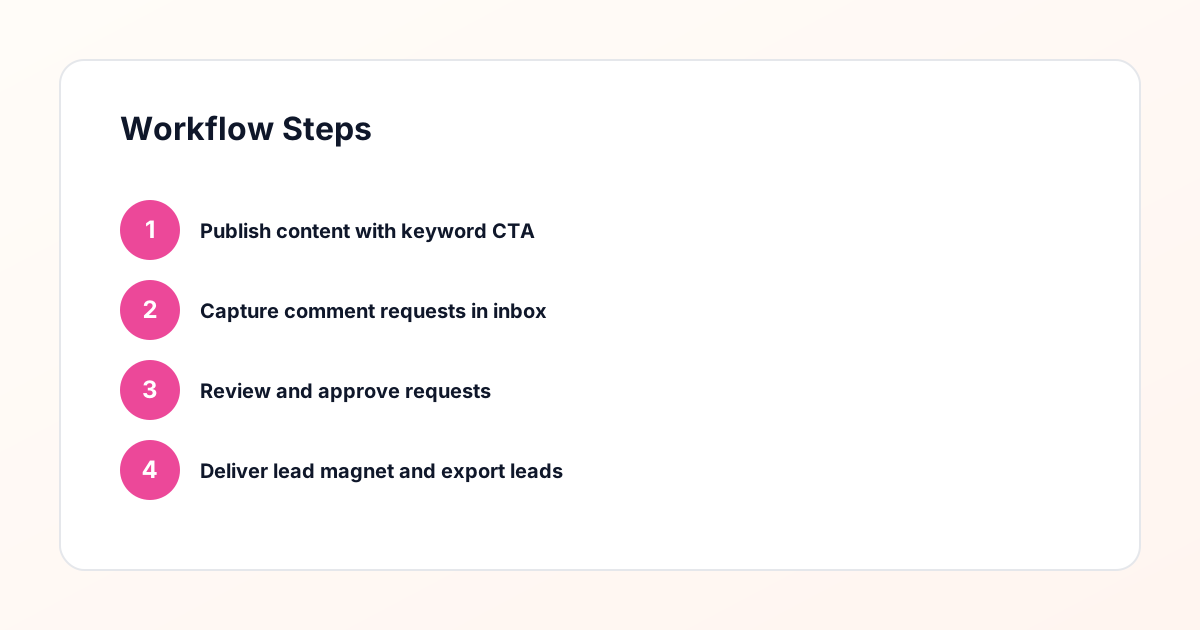
Use the same path everywhere: Offer → Lead Magnet → AI Funnel Builder → Keyword Strategy → Comment CTA → Reply Draft → Review & Approval → Campaign Launch → Request Inbox → Lead Tracking → Export.
Approval Queue Workflow
Review caption CTA, pinned comment, reply draft, lead magnet link, compliance notes, and client approval before a campaign goes live.
Export Readiness Checklist
Export only after records have clear status, no sensitive private data, an owner, follow-up stage, and a documented next action.
Campaign Recovery Workflow
If requests are missed, pause new promotion, review pending records, update Reply Library drafts, communicate manually where appropriate, and document the process fix.
Decision framework
Use this matrix before choosing the next step.
Manual review reminder
Draft response — review before sending. Use approved tools and follow platform rules. GramTrigger helps plan and manage lead magnet workflows; it does not scrape users or auto-send unauthorized DMs.
Workflow Overview
Campaign Checklist
Example 1: Fitness Coach — Meal Prep Template
A fitness coach posts a carousel showing five common meal prep mistakes and how to fix them. The final slide and the caption both instruct followers to comment "MEALS" to receive a free weekly meal prep template. The keyword is short, relevant, and unlikely to be misspelled. As comments arrive, they populate the request inbox in GramTrigger. The coach reviews each request, checking that the account is legitimate and the comment is genuinely a request for the template. Approved requests receive a personalized DM: "Hey [name], here is the meal prep template you requested! It includes a weekly planning sheet and a grocery list organizer. I also share new recipes on my email list every Sunday if you want more ideas like this." The follow-up three days later checks whether they used the template and extends the email list invitation more directly. This workflow turns engaged followers into email subscribers while providing genuine value through the template.
Example 2: Photography Creator — Preset Pack
A photography creator posts a Reel showing a before-and-after edit using their custom Lightroom presets. At the end of the Reel, they say "Comment EDIT and I will send you a free preset pack with three of my favorite edits." The keyword "EDIT" is directly tied to the content and the resource. Incoming keyword comments are captured in the request inbox. During review, the creator checks each profile to confirm genuine interest and customizes the delivery message: "Hey [name], here are the three presets I used in the Reel! They work best with natural light portraits. Let me know how they look on your photos." The follow-up message two days later invites the commenter to join the email list where full preset packs and editing tutorials are shared weekly. This campaign works well because the resource is directly related to the content, the keyword is intuitive, and the follow-up provides a clear reason to subscribe.
Example 3: Marketing Agency — Client Onboarding Checklist
A marketing agency posts a carousel about the five things every business should have before launching a paid advertising campaign. The caption asks business owners to comment "LAUNCH" to receive a free pre-launch checklist. The agency manages multiple client accounts through GramTrigger, and this campaign runs on their main brand account. The request inbox captures all "LAUNCH" comments, and the agency team reviews them to identify which commenters are potential clients versus existing followers or competitors. Approved requests receive a professional delivery message with the checklist link and a brief note about the agency services. The follow-up invites them to a free strategy call rather than directly to an email list, since the agency model is service-based rather than content-based. This example shows how the comment keyword workflow adapts to different business goals — in this case, lead generation for sales conversations rather than email list building.
Example 4: Digital Product Seller — Free Mini Course
A digital product seller who sells online courses posts a Reel sharing three tips from their best-selling course. They ask viewers to comment "START" to receive a free five-day mini course delivered via email. The keyword "START" is action-oriented and creates a sense of beginning something. Requests flow into the inbox, where the seller reviews each one and sends a delivery message containing a link to the mini course landing page with an email opt-in form. In this case, the lead magnet itself requires an email address to access, so the comment keyword workflow serves as the top of the funnel that drives people to the opt-in page. The follow-up message checks whether they enrolled in the mini course and reminds them that the course content will arrive via email. This approach uses the comment workflow to drive email opt-ins at scale while maintaining a personal touch in the DM conversation.
Example 5: Life Coach — Values Assessment Worksheet
A life coach posts a carousel about identifying your core values and how they influence decision-making. The final slide asks followers to comment "VALUES" to receive a free values assessment worksheet. The coach reviews incoming requests in GramTrigger, personalizing each delivery message with a reference to the specific post and a brief note about how the worksheet fits into their coaching approach. The follow-up message, sent two days later, asks whether the worksheet was helpful and invites the commenter to join the email list for weekly coaching insights and exclusive worksheets. This campaign works because the lead magnet is a natural extension of the content, the keyword is meaningful and memorable, and the coach uses the delivery conversation to establish their expertise and build trust before the email list invitation.
Example 6: E-commerce Brand — Style Guide PDF
An e-commerce fashion brand posts a Reel showing three ways to style their bestselling jacket for different occasions. The caption asks followers to comment "STYLE" to receive a free seasonal style guide PDF. The brand team manages the request inbox centrally, reviewing comments to filter out non-genuine requests and approve real followers. Delivery messages include the PDF link along with a note about the brand email list where styling tips, early access to new collections, and exclusive discounts are shared. The follow-up message reinforces the value of the email list by mentioning an upcoming collection launch that subscribers will see first. This example demonstrates how e-commerce brands can use comment keyword campaigns to build their email list while also driving product awareness and engagement through the content itself.
Example 7: Real Estate Agent — Buyer Guide
A real estate agent posts a carousel about the hidden costs of buying a home that first-time buyers often overlook. The caption asks followers to comment "BUY" to receive a comprehensive first-time homebuyer guide. The agent reviews requests in GramTrigger, verifying that commenters are in the target geographic area before delivering the guide. The delivery message includes the guide link and a brief note about the agent services. The follow-up invites them to a free buyer consultation and also mentions the agent email newsletter where market updates and new listings are shared. This campaign generates both email subscribers and potential client leads, demonstrating how the comment keyword workflow can serve multiple business objectives simultaneously through a single structured campaign.
What These Examples Have in Common
Despite their different niches and business models, all seven examples follow the same underlying comment keyword workflow. Each one starts with valuable content that naturally leads to a keyword call to action. Each one uses a short, relevant keyword that is easy to type and remember. Each one captures keyword comments in a request inbox, reviews them manually before replying, delivers a personalized message with the lead magnet link, and follows up to move the conversation toward the next step — whether that is an email list subscription, a strategy call, or a consultation. This consistency is the strength of the approach. The workflow is the same regardless of your industry, which means once you learn it, you can apply it to any campaign. GramTrigger provides the infrastructure that makes this workflow organized, trackable, and scalable across all of these different use cases.
Adapting These Examples to Your Business
To adapt these examples to your own business, start by identifying a free resource you can offer that solves a specific problem for your audience. Then choose a keyword that is short, relevant, and intuitive. Create content that delivers value and naturally leads to the keyword call to action. Set up your request inbox, prepare reply scripts, and establish your review and delivery process. Finally, plan your follow-up to move engaged commenters toward your desired outcome — email list, consultation, product purchase, or whatever makes sense for your model. The specific details will differ based on your niche, but the structure is proven across all seven examples above. Start with one campaign, measure the results, refine your approach, and then scale to additional campaigns with different keywords and resources. The key is to treat each campaign as a learning opportunity. Your first campaign will teach you what your audience responds to, which keywords feel natural, and where your delivery workflow needs tightening. By the time you run your third or fourth campaign, the process will feel streamlined and your results will improve with each iteration.
Compliance Note
GramTrigger helps organize Campaign Blueprints, Reply Library drafts, Request Inbox stages, approvals, delivery status, Lead Exports, and reports. Delivery should be handled manually or through approved tools depending on your account and available platform support.